Introduction
Traditional fashion content creation — model bookings, studio rentals, photoshoots — is being rapidly displaced by AI tools that deliver better output at a fraction of the cost and time. Zalando reduced image production timelines from 6-8 weeks to just 3-4 days, cutting costs by 90% while generating 70% of its editorial campaign assets with AI in Q4 2024.
Fashion brands and e-commerce teams now use AI tools not just for design ideation, but for producing the actual content assets that drive revenue: product images, lookbooks, social media visuals, and ad creatives. This guide covers the best AI fashion design tools built for content creation in 2026, how to evaluate them, and what to look for based on your workflow.
TLDR:
- AI fashion design tools span model imagery generators, generative design platforms, photography pipelines, and creative suites
- The best tool depends on your input format, output goal, and production volume
- Top picks include MetaModels.ai, Claid.ai, WearView, NewArc.ai, and Midjourney, each built for distinct use cases
- AI can reduce production costs by up to 90% compared to traditional photoshoots
- Free trials and credit-based plans are widely available; test with your actual SKUs before committing
What Is AI Fashion Content Creation (And Why It Matters in 2026)
AI fashion content creation uses artificial intelligence to generate, transform, or enhance visual assets for fashion marketing—including on-model product images, lookbook visuals, social media content, and campaign imagery—without traditional photoshoots.
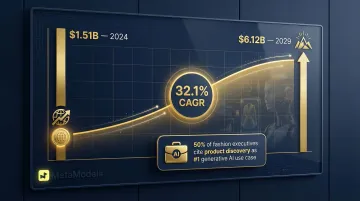
The numbers tell the story: AI-generated fashion photography was valued at $1.51 billion in 2024 and is projected to reach $6.12 billion by 2029—a 32.1% compound annual growth rate. Adoption is accelerating at the decision-maker level too: 50% of fashion executives now cite product discovery as their primary use case for generative AI.
Not all tools deliver equally. Output quality, garment fidelity, workflow fit, and scalability separate the tools worth investing in from those that look good in demos but fall apart in production.
Best AI Fashion Design Tools for Content Creation in 2026
Each tool below was evaluated on content output quality, garment accuracy, use case coverage, pricing transparency, and how well it scales for fashion brands and marketing teams. Here's how the leading options stack up.
MetaModels.ai
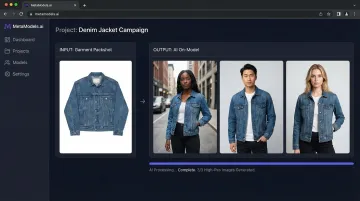
MetaModels.ai is an AI-powered fashion imagery platform that converts packshots and product photos into professional on-model content—eliminating model bookings, studio rentals, and post-production retouching.
What makes it stand out for content teams:
- Diverse AI model library covering ethnicities, body types, and demographics
- Real-time fabric draping that preserves garment details under motion
- Human-reviewed outputs verifying garment accuracy before delivery
- End-to-end production management with ready-to-post output up to 4K
- No royalties or usage limits on commercial use
| Category | Details |
|---|---|
| Key Features | Packshot-to-model conversion, diverse AI model library, custom model creation, real-time fabric draping, human-verified garment accuracy, 4K resolution output, fully automated + manual editing options |
| Best For | Fashion brands, e-commerce teams, and designers needing on-model imagery for PDPs, lookbooks, and social media without physical photoshoot logistics |
| Pricing | Starter: 20 credits; Growth: 100 credits; Pro: 300 credits; Enterprise: Custom pricing with API access — regional pricing applies |
Claid.ai
Claid.ai is a full AI product photography suite with a dedicated fashion models tool—users upload a garment photo (flatlay, ghost mannequin, or on-model) and generate photorealistic on-model images in seconds with up to 4K resolution output.
What sets it apart:
- 100+ diverse models including plus-size and kids
- API-first architecture built for high-volume, automated catalog workflows
- Image-to-video tool that converts fashion photos into short animations
- Resolution-based credit pricing for predictable costs across large volumes
| Category | Details |
|---|---|
| Key Features | Flatlay-to-model and model-to-model generation, 100+ diverse models, custom model upload, face swap via API, AI upscaler, image-to-video tool, API for bulk automation |
| Best For | Fast-fashion and mid-market brands needing hundreds to thousands of on-model images per month; development teams integrating AI fashion imagery into existing catalog workflows |
| Pricing | Free tier: 50 credits; Essential: $15/month (500 credits); Pro: $49/month (2,000 credits); credit cost varies by resolution (4-24 credits per image) |
WearView
WearView is an all-in-one AI fashion photography platform that covers the full content pipeline—text-to-model generation, virtual try-on, flatlay-to-model conversion, pose control using reference images, and AI video generation—all from a single workspace.
Key capabilities:
- Text-to-model prompting gives creative teams full control over model appearance, pose, outfit, and setting
- Consistent model identity across an entire catalog
- 4K resolution output on higher-tier plans, making it a strong fit for agencies managing content for multiple fashion clients
| Category | Details |
|---|---|
| Key Features | Text-to-model generation, AI virtual try-on, 100+ diverse model library, up to 4K output, AI video generation, consistent model identity across SKUs, pose control via reference images |
| Best For | E-commerce brands needing a full content pipeline from concept to final image; agencies producing content for multiple fashion clients requiring creative flexibility and consistent brand visuals |
| Pricing | Lite: $29/month (50 credits, HD); Pro: $49/month (200 credits, 2K, video); Advanced: $99/month (500 credits, 4K, team seats) |
NewArc.ai
NewArc.ai is an AI design engine purpose-built for fashion and apparel teams, enabling designers to move from rough sketch to photorealistic garment visual in minutes—covering sketch-to-image conversion, virtual try-on, materials simulation, image-to-video, and custom print/pattern generation.
Notable strengths:
- Bridges design creation and content production in a single workflow
- Materials simulation supports accurate fabric behavior previews across silk, denim, knitwear, and technical textiles before physical sampling
- 360° product rotations and runway-style videos ready for marketing deployment
| Category | Details |
|---|---|
| Key Features | Sketch-to-image conversion, virtual try-on on digital models, image-to-video (360° rotations, runway clips), materials simulation across fabric types, custom print and pattern generation |
| Best For | Fashion designers and product development teams needing to generate both design visuals and campaign-ready content assets from a single platform, reducing sampling cycles |
| Pricing | Free: 10 generations/month; Basic: $9/month billed yearly; Pro: $19/user/month billed yearly; Enterprise: Custom pricing |
Midjourney
Midjourney is the leading generative AI image platform adopted by fashion designers and creative directors for concept ideation, moodboard creation, lookbook visuals, and early-stage campaign exploration—generating high-quality editorial fashion imagery from text prompts.
Where it excels:
- Exceptionally strong fashion aesthetic output suited to moodboards, seasonal lookbooks, and campaign concept decks
- Editorial quality visuals that shine at the ideation and pre-production stage — not for catalog product accuracy
- Works best paired with a product-focused AI tool later in the content workflow
| Category | Details |
|---|---|
| Key Features | Text prompt-to-image generation, high-quality editorial and fashion-aesthetic visuals, style reference uploads, image variation generation, aspect ratio and resolution controls |
| Best For | Creative directors, designers, and marketing teams generating concept visuals, campaign moodboards, and lookbook imagery; best used at the ideation and pre-production stage rather than for catalog product imagery |
| Pricing | Basic: $10/month; Standard: $30/month; Pro: $60/month; all include commercial usage rights on paid plans |
How to Choose the Best AI Fashion Design Tool for Content Creation
The biggest mistake buyers make is choosing a tool based on brand visibility rather than workflow fit. Many teams invest in a generative design tool when their actual bottleneck is on-model product imagery (or vice versa), leading to underused tools and wasted budget.
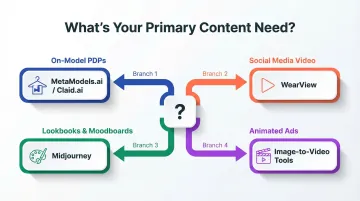
Output use case first: Map your primary content need before evaluating tools:
- On-model product page images require garment accuracy tools like MetaModels.ai or Claid.ai
- Social media content benefits from platforms with video capabilities like WearView
- Lookbook visuals and campaign moodboards suit Midjourney's editorial aesthetic
- Animated ads demand image-to-video features — check that your shortlisted tool supports them before committing
Garment fidelity requirements: For e-commerce PDPs, garment accuracy is non-negotiable—logos, prints, fabric texture, and seam detail must be preserved. Tools trained specifically on fashion e-commerce data outperform general image generators, which struggle with complex patterns and logos.
Volume and automation needs:
- Under 50 images/month: Most browser-based tools suffice
- Over 500 images/month: Look for API access, batch processing capability, and workflow integration to avoid manual slowdowns
Brand consistency across a catalog: If the same model identity must appear across an entire collection, prioritize tools that offer reusable model libraries, consistent character features, or custom model creation. Inconsistent model appearances across product pages reduce brand cohesion and shopper trust.
Conclusion
The best AI fashion design tool for content creation is not the most feature-rich—it is the one that removes the specific bottleneck in your content workflow, whether that is model booking costs, slow design iteration cycles, or inconsistent catalog imagery.
When comparing options, weigh garment output accuracy and volume capacity alongside upfront pricing. A low monthly cost that demands significant rework or forces credit top-ups at scale can quietly outpace a higher-tier plan designed for consistent, high-output production.
For fashion brands and e-commerce teams looking to eliminate model booking costs entirely while maintaining human-verified, brand-consistent imagery at scale, MetaModels.ai converts packshots into styled model photography without physical shoots or royalty fees—explore their AI model library to see what your catalog could look like in 24 hours.
Frequently Asked Questions
Which AI is best for clothing design?
The best choice depends on whether your goal is design ideation or final content creation. For design and concept creation, NewArc.ai and Midjourney excel at translating sketches and ideas into visualizations. For producing on-model content ready for e-commerce and marketing, MetaModels.ai and Claid.ai deliver garment-accurate imagery.
How to improve AI-generated content?
Use clean, well-lit garment photos on plain backgrounds, write specific and detailed prompts, and test tools with your hardest SKUs (detailed prints, sheer fabrics) during free trials. Always use human review workflows to catch garment inaccuracies before publishing.
Can AI-generated fashion model images be used commercially?
Most paid plans across leading platforms grant commercial usage rights. Always verify each tool's terms of service for restrictions on exclusivity, resale, and AI disclosure requirements—the EU AI Act, for example, mandates transparency for AI-generated content starting August 2026.
What is the difference between AI fashion design tools and AI fashion model generators?
AI fashion design tools (NewArc.ai, Midjourney) focus on creating or visualizing garment concepts, patterns, and creative direction. AI fashion model generators (MetaModels.ai, Claid.ai) focus on placing finished garment designs onto realistic AI models for e-commerce and marketing content.
How much does AI content creation cost compared to traditional fashion photography?
Traditional shoots carry costs across photographer fees, model bookings, studio rentals, and retouching—with no fixed published benchmarks due to anti-trust regulations. AI cuts those costs sharply: Zalando reported 90% reductions, and most platforms price at $0.50–$2 per image on credit-based plans.
Do AI fashion content tools work for small brands and individual designers?
Yes—most platforms offer free tiers or credit-based pay-as-you-go pricing with no minimum monthly spend. This matters: 99.7% of EU textile and clothing companies are SMEs, meaning AI tools are increasingly the practical entry point for smaller operations.