Introduction
Fashion brands face a deceptively simple problem: social media never stops. Between daily posting demands, shifting platform algorithms, and evolving audience expectations, knowing what to post, where, and how often becomes overwhelming fast — especially without a clear system.
This guide covers the right platforms for fashion, a content pillars framework, high-performing content types, and how to measure success—so you can build a consistent, repeatable content workflow tailored specifically to fashion audiences.
Key Takeaways
- Instagram, TikTok, and Pinterest are the top platforms—each requires a distinct content approach
- A content pillars framework (Promote, Educate, Inspire, Entertain) prevents repetitive posting and keeps your feed intentional
- High-quality visuals—product shots, styling videos, UGC, and BTS content—consistently outperform generic posts
- Engagement rate, CTR, and conversion rate reveal performance that like counts never show
Why Social Media Content is Non-Negotiable for Fashion Brands
For most shoppers today, a brand's social feed is the first place they encounter a product — not a search engine, not a store. 73% of US Gen Zers say social media is their main source for learning about new products, making these platforms the first stop in the fashion buying journey for an entire generation.
That discovery now converts to sales faster than ever. TikTok Shop alone is projected to reach $23.41 billion in US ecommerce sales in 2026 — a 48% year-over-year increase. Content no longer just builds awareness; it closes purchases without the shopper ever leaving the app.
The risk of falling behind is just as real. Fashion brands earned less than half the median engagement on every channel studied in 2024 — meaning the category is crowded and most brands are underperforming in it. Without consistent content, a brand cedes daily feed presence to competitors, no matter how strong the product line is.
Three things make social media impossible to ignore for fashion brands right now:
- Discovery happens here first — Gen Z finds new brands on social before anywhere else
- Sales follow directly — social commerce removes friction between inspiration and checkout
- Absence has a cost — inconsistent posting hands visibility to whoever shows up daily
Choosing the Right Platforms for Your Fashion Brand
Platform selection should be driven by audience demographics and content format strengths—not a desire to be everywhere at once. A focused presence on two or three platforms outperforms a stretched presence on six.
Instagram as the Visual Foundation
Instagram remains the leading platform for fashion. 12% of Instagram users search for fashion brands on the platform, making it the largest search category. The platform offers a high-intent shopping audience, shoppable posts and Stories, Reels for reach, and a culture built around aesthetic imagery.
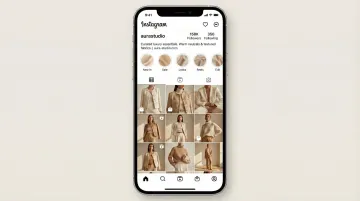
Mobile-first content consistently outperforms highly produced ads. Fashion brands using Advantage+ shopping campaigns with photo and video ads saw 42% lower cost per purchase compared to usual campaigns.
Instagram Shop creates a direct path from discovery to checkout without leaving the app. Brands that tag products in feed posts increase sales by 37% on average compared to businesses that don't — a meaningful lift from a single setup step.
Key advantages for fashion brands on Instagram:
- Shoppable feed posts and Stories that convert browsers into buyers
- Reels algorithm that extends reach beyond existing followers
- Product tagging in UGC and influencer posts
- Native checkout that removes friction at the point of decision
TikTok for Discovery and Virality
TikTok's unique strength for fashion is algorithm-driven discovery. Even new brands can reach large audiences without an established following, making it ideal for product launches and trend-led content. 55% of Gen Z say they have bought a fashion item after seeing it on TikTok, demonstrating its direct influence on purchasing decisions.
TikTok rewards authenticity over polish — GRWM videos, styling challenges, and trend participation consistently outperform produced ads. Repurposing Instagram content without adaptation rarely works; TikTok audiences recognize non-native content and scroll past it.
Pinterest and YouTube for Deeper Engagement
Pinterest functions as a high-purchase-intent inspiration platform. 60% of weekly US users report purchasing a product found on Pinterest, up from 54% the previous year. Users browse with intent to plan and buy, not just scroll passively.
YouTube delivers value through longer-form content like lookbooks, hauls, and styling tutorials that build brand loyalty over time. YouTube's influence cuts down the average online video shopper's journey by six days, accelerating the path from consideration to purchase.
The Fashion Content Pillars Framework
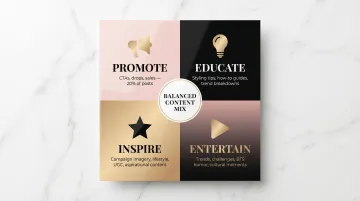
Successful fashion brands rotate through four content pillars—Promote, Educate, Inspire, Entertain—to prevent audience fatigue and declining organic reach.
Promote: Direct-response content with strong CTAs (new drops, sales, product features). This pillar is effective but should make up the smallest share of posts. The 80-20 rule applies: 80% of posts should inform, educate, or entertain; 20% can directly promote your brand.
Educate: Styling tips, how-to videos, garment care guides, and trend breakdowns that provide genuine value. This pillar positions the brand as a trusted style authority, not just a retailer.
Inspire: Campaign imagery, lifestyle content, and seasonal mood-driven posts that connect the brand emotionally to aspirational identities. This is where editorial-quality visuals matter most. 54% of consumers report that user-generated content is the most influential when making fashion purchasing decisions—which means polished brand imagery alone won't cut it.
Entertain: Trend participation, challenges, polls, behind-the-scenes humor, and culturally relevant moments that make the brand feel human and shareable. This pillar is particularly important for TikTok, where entertainment value drives views more than any other content type.
Content Types That Perform Best for Fashion Brands
Knowing which content formats actually convert is what separates a fashion brand's social presence from a scroll-stopping one. Here are the types that consistently perform across platforms.
Product Showcase Content
On-model imagery outperforms flat lay or packshot-only posts. On-model content delivers a 36% average increase in conversion rate versus flat-lay images and a 40% reduction in product return rates due to better fit visualization. Shoppers want to see how garments fit and move on a real person.
When followers see the human side of your brand, promotional content lands better and loyalty builds faster.
Effective BTS formats include:
- Design process clips showing fabric selection or sketch-to-sample progression
- Team moments that reflect brand culture and values
- Founder or designer commentary on seasonal inspiration
User-Generated Content (UGC)
UGC is among the most trusted content formats. 79% of consumers say user-generated content highly impacts their purchasing decisions, and e-commerce product pages featuring UGC can increase conversion rates by as much as 161% compared to pages without customer content.
Encourage UGC through branded hashtags, resharing customer photos, and running tagging campaigns. When customers see real people wearing your products, it reduces purchase risk and builds social proof.
Short-Form Video and Trend Participation
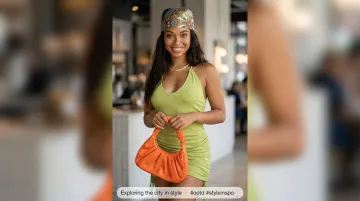
Reels, TikToks, and styling videos drive organic reach. Trend-hopping, OOTD videos, and styling challenges tap into existing platform momentum and reach users who don't yet follow the brand. Authenticity matters here — forced trend participation reads as hollow and typically underperforms organic involvement.
Formats worth testing include:
- OOTD (outfit of the day) videos featuring multiple styling options
- Trend-response content that ties your products to current platform moments
- Behind-the-collection styling challenges with a branded hashtag
Influencer and Creator Collaborations
Use a tiered influencer approach: nano and micro-influencers offer high engagement and trust for niche audiences; mid-tier and macro influencers offer reach. Aligning creator aesthetics with brand identity matters more than follower count alone. A micro-influencer with 5,000 highly engaged followers often delivers better ROI than a macro-influencer with 500,000 passive followers.
Building a Consistent Social Media Strategy
A content calendar maps content types across platforms for weeks in advance, ensuring a balanced mix of pillars, alignment with product launches and seasonal moments, and removing the "what do we post today?" problem.
Posting consistency outperforms frequency. A brand posting three high-quality, on-strategy pieces per week will outperform one posting daily low-effort content. Fashion brands posting consistently on Instagram see 0.15% engagement rate, with TikTok reaching 0.95%—both emphasizing quality and strategic fit over volume. Post between 3 and 5 times per week on Instagram and TikTok for optimal results.
Smart repurposing stretches every shoot further. A single campaign shoot, lookbook, or video can spin into multiple formats with no additional production cost:
- Instagram feed posts, Stories, and Reels
- TikTok clips and YouTube Shorts
- Pinterest pins for evergreen discovery
Plan for repurposing before the shoot starts, and one asset becomes five.
Measuring What Matters
Vanity metrics—likes, follower count—don't tell the full business story. The metrics that actually move the needle are:
- Engagement rate — Calculated as likes + comments divided by total followers, multiplied by 100. Shows whether your content actually resonates, not just reaches.
- Click-through rate (CTR) — Measures whether your CTAs and product tags are compelling enough to pull people to your site.
- Conversion rate — The direct line between social content and revenue. For fashion e-commerce, a healthy range is 1.9%–3.3%.
- Share of Voice (SOV) — SOV = (Your brand's metric / Total market metric) × 100. Tracked via mentions and @tags, it surfaces content gaps and positioning opportunities versus competitors.
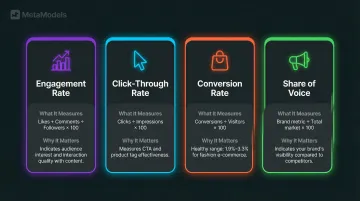
Check individual post performance weekly to spot which content types are pulling weight. Every month, step back for a platform-level review and shift effort toward whatever is driving real commercial results.
Frequently Asked Questions
What is the best social media for fashion brands?
Instagram is the leading platform for fashion due to its visual-first format and shoppable features. TikTok's rapid growth makes it essential for reaching younger audiences. Choose platforms based on where your target audience is most active—focused presence beats stretched presence.
What is the 3-3-3 rule for fashion?
The 3-3-3 rule is a minimalist styling concept: 3 tops, 3 bottoms, and 3 pairs of shoes to create a capsule wardrobe. Applied to content strategy, the same logic holds—select a few core content types and rotate them consistently rather than chasing overwhelming variety.
What are the 4 P's of fashion?
The 4 P's of fashion are Product, Price, Place, and Promotion. Each informs social media content: Product determines showcase content, Price shapes promotional messaging, Place influences platform selection, and Promotion defines CTA strategy and campaign timing.
How often should fashion brands post on social media?
Post consistently over frequently. A baseline of 3-5 times per week on primary platforms delivers optimal results. Quality and strategic fit matter more than daily volume—three well-planned posts outperform seven rushed, low-effort ones.
What content performs best for fashion brands on TikTok?
Unpolished, platform-native short-form videos perform best—GRWM, styling challenges, trend participation, and behind-the-scenes clips align with TikTok's algorithm and user expectations. Over-produced content consistently underperforms casual, relatable formats on this platform.
How can fashion brands use user-generated content effectively?
Run branded hashtag campaigns, encourage customers to tag the brand in outfit posts, and reshare UGC on official channels. UGC builds social proof and drives purchasing decisions more reliably than branded content—shoppers trust real customers over polished campaigns.