The Fashion Industry's Digital Turning Point
When American Vogue's August 2025 issue featured a fully AI-generated blonde model in a Guess advertisement, the fashion industry's relationship with artificial intelligence shifted in a measurable way. Placing a purely synthetic model in one of fashion's most prestigious publications signaled something more significant than technological novelty. Within months, H&M announced partnerships with Swedish tech firm Uncut to create digital twins of 30 real models, allowing them to appear in multiple campaigns simultaneously, even for competing brands.
These aren't isolated experiments — they're signals of a structural shift driven by hard economics. Zalando reduced campaign production time from 6-8 weeks to 3-4 days while cutting costs by 90%. That business case is difficult to ignore. Yet the same shift raises real questions: who controls a model's digital likeness, what happens to the humans displaced, and does synthetic perfection erode the authenticity that makes fashion aspirational in the first place?
This article works through that tension directly. AI models deliver speed, cost efficiency, and production scale that traditional photography can't match at the same price point. What they can't deliver — at least not yet — is the spontaneity, emotional range, and earned trust that human models bring to editorial work. The most effective brands won't treat this as a binary choice. They'll develop a clear sense of when each approach serves the work.
Key Takeaways
- AI fashion models are digitally generated or cloned figures used in campaigns and e-commerce, powered by generative AI and diffusion models
- Major brands including H&M, Guess, Valentino, and Levi's have launched AI model campaigns with mixed consumer reactions
- AI wins on cost ($2–$5 per image vs. $80–$150 for traditional shoots), speed, and scale for high-volume e-commerce
- Full replacement is unlikely—but routine product imagery jobs face significant displacement
- Ethical questions around consent, compensation, and diversity remain unresolved
What Are AI Fashion Models?
AI fashion models are digitally generated figures created using generative AI, either built from scratch using algorithms or modeled as digital twins of real humans. The technology falls into two categories: wholly synthetic models (like Lil Miquela, created without a human template) and digital clones (AI replicas of real models whose likenesses are licensed and reproduced digitally).
The Technology Behind Them
Photorealistic fashion imagery is produced using a combination of generative AI architectures and conditioning tools. The core technologies include:
- GANs (Generative Adversarial Networks) like StyleGAN for high-fidelity human image synthesis
- Diffusion models such as Latent Diffusion and Stable Diffusion for flexible, detailed image generation
- ControlNet for conditioning outputs on specific poses or sketches, enabling precise control over model positioning
These systems are trained on massive datasets of human images, garment photography, and movement data to produce realistic outputs.
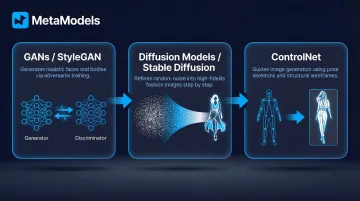
Current limitations are worth knowing. Diffusion models still produce anatomical artifacts—distorted hands, unnatural limbs, and plastic-looking skin textures. Fabric draping is another weak point, with AI frequently failing to preserve fine textile details or physically plausible garment behavior across pose changes.
Bias is a documented concern as well. Vision-Transformer models trained on datasets like LAION have been shown to disproportionately classify Black and Latino men as criminals—a reminder that demographic bias in training data doesn't disappear on its own.
The Spectrum of Use
These limitations haven't slowed adoption. AI models now span a wide range of commercial applications.
At the consumer-facing end, AI influencers like Lil Miquela—created in 2016 by Brud and now managed by Dapper Labs—maintain 2.3 million Instagram followers and have partnered with Calvin Klein, Prada, and Dior. At the operational end, back-end e-commerce platforms generate thousands of diverse AI bodies at scale, placing garments on models of different ethnicities, ages, and body types without booking a single human model.
How Major Brands Are Already Using AI Models
Guess in Vogue (August 2025)
Guess featured a fully AI-generated blonde model in a double-page American Vogue advertisement, created by London-based AI agency Seraphinne Vallora. The agency photographed a real model for a week to inform garment draping, then generated the final image using AI. The ad included a small-print disclosure, but the campaign sparked backlash over unrealistic beauty standards and the displacement of creative professionals.
H&M's Digital Twin Approach (March 2025)
H&M partnered with Swedish tech firm Uncut to create digital twins of 30 real models, including Mathilda Gvarliani. Models retain rights to their digital replicas and receive compensation comparable to traditional bookings. The images are watermarked to disclose AI usage. Despite these safeguards, the Model Alliance and UK trade union Equity raised concerns about consent, compensation structures, and the displacement of production staff.
Levi's and the Diversity Controversy (2023)
Levi's announced a partnership with Lalaland.ai to "supplement human models, increasing the number and diversity of our models for our products in a sustainable way." Critics immediately accused the brand of "digital blackface" — using AI to simulate diversity rather than hiring diverse human talent. Levi's clarified the pilot was not a substitute for real diversity action, but the episode exposed a tension that has only grown louder since.
Other Notable Campaigns
- Valentino (2025) released an AI-generated campaign for its DeVain handbag featuring surrealist visuals by artist Christopher Royal King. Despite framing it as "contemporary creativity," the campaign drew criticism for appearing "cheap" and "lazy."
- Mango (2024) launched an AI campaign for its youth line, with CEO Toni Ruiz citing "faster content creation" as the goal. Critics called it "false advertising."
- Zara (2025) used AI to generate new images of real models in different outfits, accelerating production timelines without full photoshoots.
- Zalando (2024–2025) piloted digital twins with Orendt Studios; by Q4 2024, approximately 70% of its editorial campaign assets were AI-generated.
The Business Logic
Fashion brands produce massive volumes of product imagery for global e-commerce operations. AI models let them generate localized, size-inclusive, and market-specific visuals faster and at a fraction of traditional photoshoot costs. For brands managing hundreds or thousands of SKUs each season, that's a real production advantage. The ongoing question — for brands, models, and consumers alike — is whether the efficiency gains justify the creative and ethical trade-offs.
The Business Case: Why Fashion Brands Are Embracing AI Models
Cost and Time Savings
The financial advantage is stark. A traditional on-model e-commerce photoshoot costs $5,000 to $25,000 per day, with effective per-image costs ranging from $80 to $150 when accounting for:
- Photographer fees: $1,000–$3,500/day
- Model booking: $600–$1,500/day
- Studio rental: $500–$2,000/day
- Hair and makeup: $400–$1,200/day
- Retouching: $20–$80/image
AI-generated imagery drops this to $1–$5 per image—a reduction of over 95%. That price point makes professional on-model content accessible to small D2C brands that traditional shoot budgets would price out entirely.
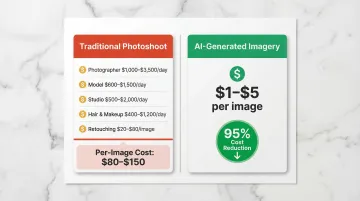
Time compression is equally dramatic. Zalando reduced campaign production from 6–8 weeks to 3–4 days using digital twins, cutting costs by 90%. For brands operating across multiple regions and time zones, this speed enables rapid localization, seasonal pivots, and A/B testing at scales traditional photography cannot match.
Scalability That Physical Shoots Cannot Match
E-commerce platforms operate at massive scale. Amazon carries an estimated 600 million products, with clothing among its top categories. ASOS shoots approximately 150 new styles per week. For these volumes, traditional photography becomes a bottleneck.
AI models eliminate scheduling constraints entirely. A single AI model can be placed into any setting, wearing any garment colorway, at any time (no rebooking, rescheduling, or reshooting required). Brands can generate content for entire catalogs in days rather than months, enabling rapid product launches and seasonal campaigns without logistical friction.
Inclusivity on Demand
AI model libraries allow brands to represent diverse body types, ethnicities, ages, and sizes across their entire catalog, which is logistically difficult and expensive to achieve consistently through traditional shoots. A brand can showcase the same garment on models of different ethnicities, body types, and ages without coordinating multiple bookings or managing separate photoshoots.
This capability introduces both genuine benefit and ethical complexity. On one hand, it enables representation that traditional production budgets might exclude. On the other, it risks becoming performative — brands simulating diversity through AI rather than investing in hiring and supporting diverse human talent.
Eliminating Logistical Constraints
Traditional photoshoots carry unpredictable variables — bad-skin days, scheduling conflicts, international travel costs, damaged garment samples requiring reshoots. For brands operating globally, coordinating shoots across time zones and regions compounds these costs. AI removes all of it: no availability conflicts, no weather delays, no location scouting. For brands where operational reliability directly affects launch timelines, that predictability matters.
MetaModels.ai in Practice
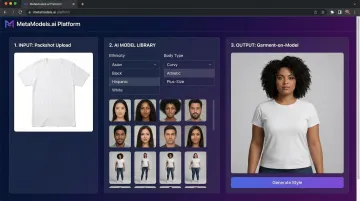
MetaModels.ai shows how these advantages work in practice. The platform converts packshot images (flat-lay or ghost mannequin photos) into styled AI model content using real-fabric draping technology that preserves garment color, shape, texture, and proportions.
Brands select from a diverse AI model library spanning ethnicities, body types, and ages — or request custom models built to their brand identity. Every image is reviewed by fashion specialists before delivery, verifying color accuracy and garment proportions. Final content arrives ready to publish at up to 4K resolution, with no model royalties, licensing fees, or usage restrictions.
The Limitations: What AI Models Still Can't Fully Replace
The Editorial and Emotional Gap
Top-tier fashion campaigns, runway shows, and luxury brand storytelling depend on unpredictable, human moments—the expression that captures vulnerability, the spontaneous movement that reveals attitude, the energy between model and photographer that creates tension. Current AI generation excels at replicating expected poses but struggles to produce the authentic spontaneity that makes editorial imagery compelling.
A 2025 peer-reviewed study in the Journal of Business Research found that when consumers believe emotional marketing communications are created by AI, positive word-of-mouth and customer loyalty decline due to heightened "moral disgust" and reduced perceived authenticity.
This AI-authorship effect matters most where emotional connection drives purchase intent—luxury goods, aspirational lifestyle branding, personal care. In these categories, a synthetic face lacks the credibility and relatability that human models provide.
Consumer Trust and Authenticity
Research reveals mixed consumer reactions. Adobe data from July 2025 showed that shoppers arriving from generative AI sources were 10% more engaged (longer visits, lower bounce rates) but 23% less likely to convert than non-AI traffic—though this gap is narrowing. A 2026 study by Lee & Kim found that social media ads featuring AI models elicited greater advertising skepticism, which diminished brand advocacy and purchase intentions, driven by ethical concerns and perceived job threats.
Disclosure labels present a dilemma. Transparency is increasingly required by law (EU AI Act, ASA guidelines), yet explicitly labeling ads as AI-generated often lowers trust and purchase intent for high-involvement products. Consumers perceive AI as a cost-saving measure that contradicts luxury's promise of craftsmanship and authenticity.
Current Technical Limitations
AI still produces artifacts that undermine photorealistic output:
- Unnatural hand positions and finger geometry
- Inconsistent fabric draping and texture rendering
- Lighting anomalies and plastic-looking skin tones
- Anatomical errors during pose changes
These issues are shrinking with each model generation, but they haven't disappeared.
Platforms like MetaModels.ai address this through human review—fashion specialists check and correct details before delivery—but the need for manual quality assurance acknowledges that fully automated AI generation alone cannot reliably preserve the precise visual details fashion brands require.
The Broader Human Cost
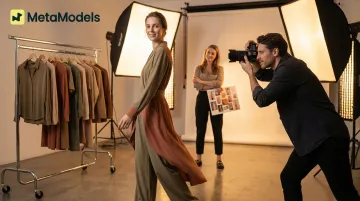
Photoshoots are collaborative productions involving photographers, stylists, hair and makeup artists, creative directors, and production teams. A 2025 Cornell University Worker Institute report titled Fashion's Data Doubles: How AI is Reshaping Modeling Work documents a practice dubbed "Frankensteining"—using generative AI or conventional editing to alter hairstyles, body parts, or repurpose images across campaigns without compensating the original model.
The report shows how agencies and brands increasingly treat models' labor as raw data, bypassing contractual protections to extract additional value without rehiring. That displacement ripples outward, affecting the entire production ecosystem built around traditional photography.
The Ethical Debate: Consent, Compensation, and Beauty Standards
The Consent and Likeness Problem
Models in many countries, including the US, lack union protections, meaning their body scans, images, and likenesses can be used to train AI systems or create digital twins without clear consent frameworks. A Cornell/Data & Society research report found that brands can use a single booking's images to generate extensive AI-derived content without rehiring or compensating the original model.
Fashion models are typically classified as independent contractors rather than employees, preventing them from unionizing and leaving them vulnerable to exploitative contracts where agencies sign away AI rights on their behalf.
The New York Fashion Workers Act, effective June 2025, explicitly prohibits the use of a fashion model's likeness in AI-generated content without explicit consent. This protection is state-specific, however, and doesn't extend to non-union models working internationally.
The Compensation Gap
Models whose digital twins are licensed may earn less per job than in-person shoots, while facing higher competition from fully synthetic models. The industry has not yet established clear, fair compensation standards for AI likeness usage.
SAG-AFTRA secured historic digital replica terms in its 2023 TV/Theatrical Agreement and 2025 Commercials Contracts, requiring informed consent and minimum compensation for digital replicas. These protections, however, apply only to union members in specific sectors, not to the broader fashion modeling workforce.
Sara Ziff, founder of the Model Alliance, stated regarding H&M's digital twins: "In an industry that has historically been a backwater for workers' rights, H&M's new initiative raises critical questions about consent and compensation, and has the potential to replace a host of fashion workers."
The Illusion of Diversity vs. Genuine Inclusion
Brands using AI to simulate representation of communities they don't authentically employ or understand risk cultural appropriation, misrepresentation, and consumer backlash. Levi's faced intense criticism when their Lalaland.ai partnership was perceived as using AI to avoid hiring diverse human models.
That goes beyond making photoshoots more efficient. It's using technology to create the appearance of inclusion without the investment, authentic hiring, or cultural engagement that genuine representation requires.
Ziff noted regarding the Cornell report: "We know that the fashion industry is built on the back of long-standing inequitable power structures. The steps we take today will determine whether AI entrenches these imbalances or helps us reimagine a better, more equitable fashion industry."
Will AI Replace Fashion Models? The Nuanced Answer
The Direct Answer
For high-volume e-commerce product imagery—catalog shots, marketplace listings, social media content—AI models are already a viable and growing replacement for routine shoots. The economics alone are hard to argue with: faster turnaround, lower per-image cost, and the ability to scale production without scheduling constraints. For editorial storytelling, luxury campaigns, and any context where human connection drives value, human models remain the stronger choice for the foreseeable future.
What's Actually Likely to Change
The realistic near-term outcome isn't wholesale replacement — it's a significant reduction in the volume of traditional model bookings, particularly for e-commerce fit shots, catalog imagery, and social ad content. The US Bureau of Labor Statistics projects a modest 0.5% decline in modeling jobs from 2024–2034, though it acknowledges that GenAI impacts are still too uncertain to be fully reflected in those numbers.
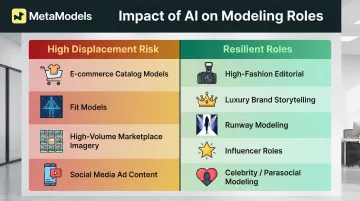
Industry analysts broadly agree on a clear bifurcation between roles that AI threatens and those it doesn't:
At-Risk Categories:
- E-commerce catalog models
- Fit models (3D body scans can replace live fit sessions)
- High-volume product imagery for marketplaces
- Social media ad content
Resilient Categories:
- High-fashion editorial campaigns
- Luxury brand storytelling
- Runway modeling
- Influencer-driven roles
- Celebrity and parasocial relationship-based modeling
Does "Supplement, Not Replace" Hold Up?
Multiple brands—including Levi's—have publicly stated that AI is a supplement to human modeling, not a replacement. That framing likely underestimates the cumulative economic pressure AI will create over the next 5–10 years. When a brand can generate 300 product images in three days at roughly $0.50 per image instead of booking 10 separate photoshoots at $10,000 each, the incentive to shift volume away from traditional shoots becomes difficult to resist.
The Smartest Path Forward
The brands navigating this well aren't choosing one or the other — they're being deliberate about where each approach earns its place.
- Use AI for scale, consistency, diversity representation, and cost-efficient routine product imagery
- Invest in human talent for editorial authenticity, creative direction, and emotional resonance
- Apply human review to AI output to maintain garment accuracy and brand consistency
MetaModels.ai's human-reviewed workflow reflects exactly this logic: AI handles volume and speed while human oversight catches the details that automated systems still miss.
Frequently Asked Questions
Are AI fashion models cheaper than hiring real models?
Yes, significantly. AI platforms eliminate booking fees, studio costs, and post-production overhead, reducing per-image costs from $80–$150 to as low as $2–$5 per image. However, initial setup costs and subscription fees vary by platform.
What major brands are already using AI fashion models?
Several major brands have moved beyond experimentation:
- H&M partnered with Uncut to create digital twins of 30 real models
- Guess featured a fully AI-generated model in American Vogue
- Levi's partnered with Lalaland.ai for diversity representation
- Valentino, Mango, and Zara have all run AI-generated campaigns using approaches ranging from digital twins to fully synthetic models
Can AI models replicate the quality of professional fashion photography?
For e-commerce product imagery, AI models now meet or exceed quality standards when combined with human review. For high-end editorial campaigns requiring spontaneity, artistic nuance, and emotional authenticity, AI still falls short of what experienced human models and photographers create collaboratively.
Do consumers react differently to AI-generated vs. human model imagery?
Consumers accept AI imagery in e-commerce and catalog contexts but push back in aspirational or luxury branding. Disclosing AI generation can reduce trust and purchase intent for high-involvement products — a dynamic driven by concerns about authenticity and perceived cost-cutting.
Is it ethical to use AI models in fashion advertising?
Core concerns include consent gaps, compensation inequities for digital twin usage, and reinforcing unrealistic beauty standards. The most responsible approach combines transparent disclosure, fair licensing agreements for models whose likenesses are used, and treating AI as a complement to genuine diversity efforts — not a replacement for them.
What does AI mean for the future of fashion photography jobs?
Routine e-commerce model roles face the highest displacement risk. Creative, editorial, and direction roles remain valuable—AI cannot yet replicate the spontaneity and artistic judgment these roles require. New roles are emerging alongside the disruption, including AI art direction, prompt engineering for fashion imagery, and quality assurance specialists who review AI outputs for garment accuracy and brand consistency.