Introduction
Luxury menswear brands face a distinct challenge online: how do you sell a £2,500 tailored suit, a premium wool overcoat, or handcrafted leather accessories when shoppers cannot feel the fabric's weight, see how a jacket truly falls on the shoulders, or envision fit on their own body type?
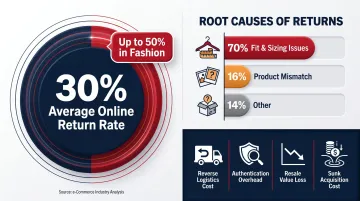
This visual gap drives costly returns. Online clothing return rates average 30%, with up to 70% of fashion returns attributed to fit and sizing issues. For luxury menswear brands, where reverse logistics erodes premium margins disproportionately, this is a revenue-critical problem.
That revenue pressure is driving a real shift. Luxury virtual male models powered by AI are emerging as a precision solution — one that meets the exacting visual standards luxury brands demand while unlocking scale and diversity traditional photoshoots never could. This article examines why that matters, what separates luxury-grade AI models from generic alternatives, the measurable business case, and how brands can implement this technology.
Key Takeaways
- Virtual male models cut photoshoot logistics entirely while preserving the visual quality luxury menswear demands
- Accurate fabric simulation is non-negotiable — generic AI tools fail to reproduce tailored suit construction or wool drape
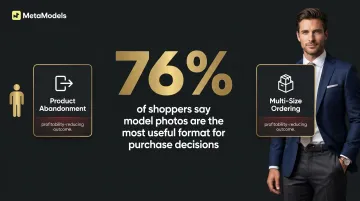
- 76% of shoppers say model photos are the most useful format for purchase decisions, yet many luxury menswear brands still rely on flat-lay imagery
- Every SKU and colorway gets diverse, brand-consistent model imagery — generated at scale, on demand
- Choose a platform with diverse model libraries, custom model creation, human quality review, and royalty-free usage rights
Why Luxury Menswear Ecommerce Has a Unique Visual Problem
The Persistent Flat-Lay Habit in Menswear
While womenswear has historically dominated on-model ecommerce imagery, menswear has lagged behind. Many brands—particularly those managing large SKU catalogs—still rely heavily on flat-lay photography, ghost mannequins, or minimal model coverage. This creates a credibility gap in luxury, where the garment's construction and drape are fundamental to the value proposition. When a customer is evaluating a £1,800 blazer, the shoulder line isn't decorative—it's the product.
The global luxury menswear market reached $26.3B in 2024 and is projected to grow at a 5.1% CAGR through 2030, yet visual representation standards have not kept pace with buyer expectations or commercial scale.
The True Cost of Traditional Luxury Menswear Photoshoots
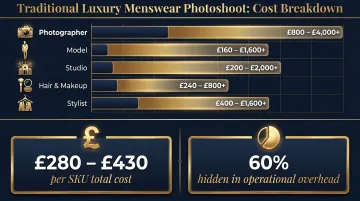
Traditional luxury menswear photoshoots are operationally expensive and logistically complex. According to industry pricing guides, a professional fashion photoshoot day typically begins at approximately £8,000 when working with professionals, including:
- Photographer fees: £800–£4,000+ per day
- Model fees: £160–£1,600+ per day
- Studio or location rental: £200–£2,000+ per day
- Hair and makeup: £240–£800+ per day
- Stylist: £400–£1,600+ per day
- Post-production retouching: Adding 20%–50% to total costs
When fully accounted for, traditional photoshoots cost £280–£430 per SKU, with approximately 60% of true costs hidden in operational overhead—damaged inventory, internal coordination, and margin erosion from missed sell-through windows. For luxury brands releasing seasonal collections, capsule lines, and colorway variations, these costs compound quickly — and the visual quality still isn't guaranteed to meet the standard luxury buyers expect.
Why Luxury Menswear Demands a Higher Visual Bar
Luxury menswear buyers are paying for construction, not just colour. A tailored suit's shoulder line, the drape of a wool overcoat, the grain of a leather belt — these details define the product's value. Customers at this price point need to see precise garment behaviour on the male form, not a hanger or flat surface.
That requirement separates luxury menswear from other fashion categories. The interplay between structured garment elements (canvassing, shoulder pads, tailored waists) and draped fabric creates visual challenges that flat-lay photography simply cannot resolve.
The Narrow Archetype Problem
Historically, luxury brands have used a very limited range of male model body types and ethnicities. Yet the actual luxury buyer base is far more diverse than the models representing it:
- Black consumers are 72% more likely than the general U.S. population to be luxury fashion enthusiasts
- Asian consumers are 54% more likely
- Hispanic consumers are 37% more likely
The luxury industry lost approximately 20M consumers in 2025, with the active client base dropping to 330M from 400M in 2022. Brands producing imagery that doesn't reflect their buyers cannot afford that kind of attrition.
The Visual Confidence Gap
Men shopping luxury online want to see how garments fit on someone with a similar build, proportions, or aesthetic. Research shows 76% of shoppers say model photos are the most useful format for purchase decisions, helping them answer: "Will this actually work on my body?" and "How will this fit into my life and reflect my style?"
When that visual confidence is absent, shoppers either don't convert or they return after purchase. Baymard Institute's apparel ecommerce UX research explicitly recommends providing images of apparel products on a human model, finding that users who cannot visualise fit either abandon the product or order multiple sizes—both outcomes eroding profitability.
What Makes a Virtual Male Model Truly Luxury-Grade
Not all AI-generated male models are suitable for luxury ecommerce. Generic AI model tools produce outputs that look synthetically polished or anatomically imprecise—triggering shopper scepticism and damaging brand perception. Luxury-grade virtual male models require photorealistic rendering that looks authentic, not artificially perfect.
Fabric Realism as the Non-Negotiable Standard
The single most important quality benchmark for luxury menswear is fabric behaviour: how a garment drapes, creases, and falls on the male body. AI systems must accurately simulate the weight of wool, the structure of a blazer's canvas, the softness of cashmere, and the rigidity of denim, rather than simply overlaying a flat texture onto a body shape.
Cloth physics simulation models fabrics as particle meshes connected by constraints representing threads, with particles reacting to gravity, wind, and user-defined forces. Different fabrics require material-specific parameter tuning for weight, elasticity, friction, and stiffness. Structured garments add another layer of complexity, given the interplay between rigid elements (canvassing, shoulder pads) and draped fabric.
Tools that get this right allow luxury brands to present technically credible product imagery at scale. Those that don't produce the kind of visual errors that erode shopper trust at the point of purchase.
Diversity Beyond Skin Tone
True luxury-grade virtual male models must reflect diversity in body type, proportions, age, and cultural aesthetics. Skin tone is only the starting point. Luxury menswear buyers globally range from athletic builds to slim European tailoring fits to broader silhouettes. Showing the same garment across multiple realistic male body types directly addresses sizing anxiety and increases purchase confidence.
The commercial case is straightforward: when a customer can see a garment on a model whose proportions resemble their own, they make more confident purchase decisions. Representation here is a conversion driver, not a gesture.
Brand Consistency and Custom Model Control
Luxury brands cannot afford visual inconsistency across their digital catalogue. Every product page, lookbook, and campaign asset must feel cohesive and on-brand, distinct from what a competitor might produce with the same off-the-shelf tool.
Luxury-grade AI platforms allow brands to create custom virtual male models that embody their specific aesthetic. Consider what that controls:
- The model's physical type, age range, and cultural signal
- Consistent lighting and styling treatment across all catalogue imagery
- Visual language that reinforces brand positioning rather than diluting it with generic figures
Human Quality Review for Garment Accuracy
Fully automated AI generation is insufficient for luxury. Garment accuracyrequires a human review layer: lapels must align correctly, fabric wrinkles must appear in physically plausible places, and accessories must be positioned authentically. Brands in the luxury tier cannot publish images with anatomical errors or garment distortions; the credibility cost is too high.
Research published in the Journal of Advertising Research found that when luxury brands disclose AI use, consumers view them less favourably, perceiving AI content as requiring less human effort. This conflicts directly with the meticulous craftsmanship expectations luxury buyers hold.
Poor-quality AI output carries a higher reputational penalty for luxury brands than for mass-market retailers. Human review is not optional; it is the quality gate that makes AI imagery viable at this tier.
The Business Case: Conversion, Returns, and Cost Savings in Luxury Menswear
On-Model Imagery Drives Conversion
76% of shoppers say model photos are the most useful and influential format for purchase decisions. The preference is functional: on-model imagery answers the core question every online shopper asks — "How will this look on me?"
For luxury menswear, where purchase decisions involve significant financial commitment, visual confidence is revenue-critical. Baymard Institute's research across 1,720+ usability issues recommends on-model imagery for apparel ecommerce, finding that users who cannot visualise fit either abandon the product or order multiple sizes—both outcomes reducing profitability.
The Return Rate Problem in Luxury Menswear
Return rates in online fashion ecommerce are substantial: 30% on average, with some reports as high as 50%. 70% of fashion returns are attributed to fit and sizing issues, with an additional 16% occurring because items do not match their online descriptions or images.
For luxury items, returns carry costs that compound quickly:
- Reverse logistics is significantly more expensive than forward logistics
- High-value items require authentication and reprocessing protocols
- Returned luxury goods may lose resale value or require discounting
- Customer acquisition costs are sunk when purchases are returned
When shoppers can see how a garment fits on a realistic male form—especially one that reflects their own body type or proportions—they make more confident purchase decisions, directly reducing size-related and fit-related returns.
Cost Comparison: Traditional Shoots vs AI-Generated Content
Traditional luxury menswear photoshoots operate on a per-shoot cost model that scales linearly with volume. Fully loaded photoshoots cost £280–£430 per SKU, with 60% of that figure hidden in operational overhead.
AI-generated model content operates on a fundamentally different cost structure. After initial platform setup, costs become largely fixed, allowing unlimited SKU coverage without proportional spend growth. Platforms like MetaModels.ai offer pricing starting from £16 per image, with subscription plans enabling brands to generate 300+ on-model images monthly at a fraction of traditional photography costs.
The Content Volume Advantage
Luxury brands release seasonal collections, limited drops, capsule lines, and colourway variations—all requiring on-model imagery. With traditional photography, this creates constant scheduling backlogs. Retailers lose up to 23% of potential revenue due to bad product data, with missing or delayed imagery as a primary contributor. Up to 22% of catalogue variants are unsellable at any given time because visual assets are incomplete.
With AI virtual male models, every SKU in every colourway can have on-model content at launch — not weeks later. For brands where launch-day visibility drives search ranking and repeat visits, closing that imagery gap directly affects revenue.
From Packshot to Campaign: How Virtual Male Models Are Created
The Core Production Workflow
Brands start with a flat-lay or packshot image of a garment and use AI to generate fully on-model imagery. The process involves:
- Upload the source garment image — Flat-lay or ghost mannequin product photography serves as the input
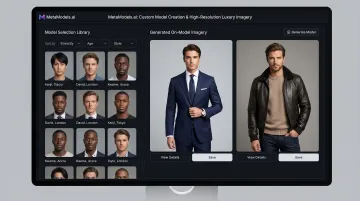
- Select or customise a virtual male model — Choose from a curated library spanning diverse ethnicities, body types, and age ranges, or create a custom model aligned to brand identity
- Generate photorealistic output — The AI drapes the actual garment fabric onto the selected model in real-time, preserving colour, shape, texture, print, and proportions
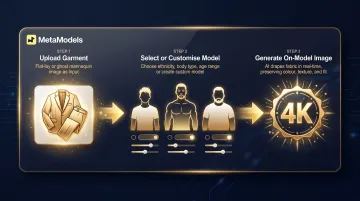
No physical model, studio, or shoot day is required.
Real-Time Fabric Draping Technology
Rather than compositing a flat image onto a human shape, the AI simulates how a specific textile — its weight class, structure, and cut — would fall and interact with the male body in a given pose. The result is fabric behaviour, not a filter.
The technology handles critical menswear details including shoulder fit accuracy, lapel detail preservation, and trouser break — elements essential for luxury presentation. For structured garments like tailored blazers, the system balances rigid components (canvassing, shoulder pads) with draped fabric, a process that requires material-specific parameter tuning.
Output and Deployment
Generated images are produced at 4K resolution, reviewed for garment accuracy by human fashion specialists, and deployed directly to:
- Product detail pages (PDPs)
- Social media platforms (Instagram, Facebook, Pinterest, TikTok)
- Paid advertising campaigns
- Digital lookbooks
- Marketplace listings (Amazon, Farfetch, Net-a-Porter)
Assets arrive ready-to-deploy, eliminating the retouching, colour correction, and masking that slow down traditional shoot workflows.
What Luxury Menswear Brands Should Look for in an AI Model Platform
Selecting the right AI virtual male model platform requires evaluating several critical criteria:
Model Library Depth and Diversity
The platform should offer meaningful variation across:
- Ethnicity and cultural aesthetics
- Body types and proportions (athletic, slim, broad, tailored fits)
- Age ranges (from youthful contemporary to mature executive)
This range directly impacts conversion. Shoppers who can see garments on models who resemble them are more likely to buy.
Custom Model Creation Capability
Luxury brands need the ability to create or customise brand-specific models that embody their aesthetic—a particular look, energy, or cultural signal. Without this, product pages and campaign assets risk looking like they came from a stock template rather than a deliberate brand identity.
Resolution Standards for High-Fidelity Output
Minimum 4K resolution is non-negotiable for luxury. Lower-resolution outputs limit deployment across high-resolution displays and print, and signal to discerning buyers that quality wasn't a priority.
Human Quality Review for Garment Accuracy
The platform should include human quality review to catch garment accuracy issues before publishing. Automated AI generation alone cannot reliably ensure that lapels align correctly, fabric wrinkles appear in physically plausible places, and accessories are positioned authentically—all critical for luxury credibility.
Licensing and Usage Rights
Platforms that include royalty-free, unlimited use of generated imagery (no per-image fees or content restrictions) give brands the freedom to scale without legal or financial friction.
Traditional modeling contracts typically run 1–3 years, with usage rights tiered across channels, geographic markets, and time windows. Extending image use beyond the original agreement means renegotiation and added fees. AI-generated content eliminates that process entirely.
How MetaModels.ai Addresses These Criteria
MetaModels.ai is built specifically for fashion brands: a model library spanning diverse ethnicities, demographics, and body types; custom model creation aligned to brand identity; real-time fabric draping technology; human-reviewed outputs for garment accuracy; and ready-to-post content at up to 4K resolution—all with no models, no royalties, and no limits. The platform specialises in menswear rendering, accurately preserving shoulder fit, lapel detail, and trouser break. For luxury brands that can't afford visual inconsistency, that specificity matters.
Frequently Asked Questions
Are virtual or AI fashion models real people?
AI virtual models are entirely computer-generated digital humans — not real people, not retouched photographs, and not tied to any individual identity. Brands control the model's appearance and usage entirely, with no contracts, royalties, or reputational risks tied to human talent.
What is a luxury virtual male model?
A luxury virtual male model is a photorealistic, AI-generated digital human designed specifically to display high-end menswear with the visual precision required by luxury brands — including accurate fabric drape, tailoring detail, and consistent brand aesthetic.
How do AI male models reduce return rates for menswear brands?
When shoppers can see how a garment fits on a realistic male form — especially one that reflects their own body type or proportions — they make more confident purchase decisions, which directly reduces size-related and fit-related returns.
Can AI-generated male models fully replace traditional photoshoots for luxury brands?
AI virtual models cover most product photography needs — PDPs, lookbooks, ads, and social content — though some luxury brands retain traditional photography for flagship editorial campaigns. Either way, AI dramatically cuts dependency on physical shoots and the costs that come with them.
How much does using AI virtual male models cost compared to hiring real models?
Traditional luxury menswear shoots carry recurring costs across model fees, studio rental, styling, and post-production. AI model platforms use subscription or per-image pricing, making per-asset costs a fraction of traditional photography — especially as SKU volume scales.
How do luxury brands maintain brand identity when using AI-generated male models?
The best AI platforms let brands build custom virtual models matched to their specific aesthetic. Every generated image stays consistent with the brand's visual language, unlike generic off-the-shelf AI figures that could appear in any brand's content.