
Key Takeaways
- Updating catalog images means swapping outdated product visuals across channels to match live inventory and seasonal campaigns
- Studio photoshoots bottleneck production — scaling to hundreds of SKUs per season isn't realistic through traditional methods alone
- AI tools convert flat packshots into on-model visuals, cutting out physical shoots and model bookings entirely
- Clean source images and structured review workflows are what separate fast launches from delayed ones
- Speed only helps when the output stays consistent — rushed imagery that looks off-brand costs more than it saves
What Is the Catalog Image Update Process in Fashion Retail?
Catalog image updating is the systematic replacement or creation of product visuals to ensure shoppers see accurate representations on product pages, marketplaces, and campaign assets. The process covers new SKUs, color variants, and seasonal refreshes across all retail channels.
Getting accurate, publish-ready imagery live quickly matters because new products need to sell and outdated visuals mislead buyers. Unlike a one-time seasonal shoot, catalog updating is a recurring operational workflow that runs parallel with inventory management.
Why Fashion Retailers Need to Update Catalog Images Quickly
The Business Cost of Delayed Imagery
Delayed imagery means new arrivals go live without visuals or with placeholder packshots, reducing conversion and revenue. 61% of shoppers consider product images and videos the most important product page element for completing a purchase—when those images are missing or poor quality, conversion drops immediately.
Why Fashion Retail Demands Speed
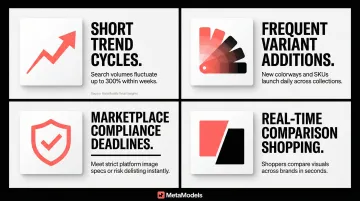
Fashion retail moves faster than most categories. A few factors explain why image speed matters more here than anywhere else:
- Short trend cycles — Trending styles fluctuate in search volume by up to 300% in just 12 months
- Frequent variant additions — New colors and sizes arrive continuously, each requiring accurate imagery
- Marketplace compliance deadlines — Platforms like Amazon enforce strict image requirements and suppress non-compliant listings
- Real-time comparison shopping — Shoppers evaluate multiple listings simultaneously; poor visuals lose the sale
What Goes Wrong Without a Fast Process
When image production can't keep up with inventory, the consequences compound quickly:
- Inconsistent visuals erode brand perception across the catalog
- Placeholder images drag down marketplace search rankings
- Every day of delay burns selling time on trend-sensitive SKUs — a window that often closes within weeks
How Fashion Retailers Update Catalog Images: The Modern Workflow
The end-to-end update process begins with a trigger (new SKU, season change, performance data), moves through image creation or generation, then goes into review and quality control, and ends with export and channel publishing.
The starting asset is typically a packshot—flat lay or ghost mannequin image—or existing garment photo. Input quality directly determines downstream speed and output quality.
The Core Transformation Step
Retailers now use AI-powered platforms to convert packshots into on-model catalog images without scheduling photoshoots. Platforms like MetaModels.ai allow brands to upload garment images and generate human-verified, on-model visuals with diverse model options and real-time fabric draping — cutting production timelines from weeks to days.
Image quality review—whether manual, AI-assisted, or hybrid—acts as the checkpoint ensuring garment accuracy, brand consistency, and platform compliance before images are published.
Instead of a 2-to-4-week photoshoot-edit-upload cycle, brands can move from packshot to live listing in days — enabling faster new-arrival launches without added production overhead. The steps below show how that cycle works in practice.
Step 1: Asset Preparation
Gather input assets—packshots, ghost mannequin images, or existing garment photos. Ensure they meet minimum quality requirements:
- Clear front view with good lighting
- No heavy filters or image degradation
- Full garment visible in frame
- Accurate color representation
AI tools amplify both good and poor inputs, so asset preparation directly impacts output quality and speed.
Step 2: Image Generation or Production
Choose the production method based on scale and brand requirements:
Traditional studio shoot for:
- Hero imagery and flagship launches
- Lookbook content requiring art direction
- Campaign storytelling assets
AI-driven on-model generation for:
- High-volume SKU updates
- Color variant refreshes
- Routine catalog maintenance
AI workflows involve model selection (body type, skin tone, style preference) and generating multiple output formats for different channel needs. MetaModels.ai delivers content in up to 4K resolution, formatted for e-commerce platforms, social media, advertising, and marketplace listings.
Step 3: Review, Export, and Publish
Run generated images through quality control to verify:
- Garment accuracy (fit, drape, construction)
- Color fidelity matching the actual product
- Brand-standard framing and composition
- Platform compliance requirements
Export in correct resolution and format for each channel—marketplace thumbnail specs, website product detail pages, social assets—then push live across platforms simultaneously.
Key Factors That Affect How Quickly Catalog Images Can Be Updated
Input Image Quality Is the Most Controllable Variable
A clear, well-lit packshot with the full garment in frame allows any downstream process to work faster and produce better results. Poor inputs create rework loops that negate speed gains. Brands that skip asset preparation find themselves regenerating images repeatedly, losing expected time savings.
SKU Volume and Variant Complexity Impact Throughput
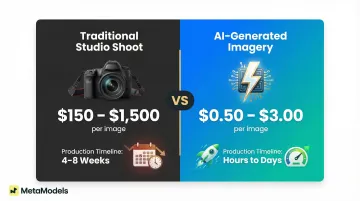
A brand with 50 SKUs and a brand with 5,000 face fundamentally different operational realities. Major retailers like Zalando manage approximately 890,000 SKUs, while ASOS offers over 50,000 product lines. At this scale, traditional photo production timelines add 4–8 weeks from concept to live images—creating massive backlogs that only automation can resolve.
Platform Requirements Create Downstream Constraints
Each channel has different specifications:
| Platform | Resolution | Aspect Ratio | Background | On-Model Requirements |
|---|---|---|---|---|
| Amazon | Min 1,600px | 10:13 portrait | Pure white (RGB 255,255,255) | Adult apparel must be on-model |
| Shopify | 2048 x 2048px | 1:1 square | No requirement | Flexible |
| 1024 x 1024px | 1:1 square | White backdrop recommended | Flexible | |
| Zalando | 1801 x 2600px | 1:1.44 portrait | White background | Both permitted |
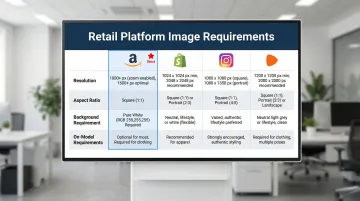
Teams that standardize image specs upfront compress the export and compliance step significantly.
Review Processes Are Often the Hidden Bottleneck
Even when image generation is fast, internal sign-off cycles, brand guideline enforcement, and garment accuracy checks can slow publication by days. Structured review keeps quality intact without killing momentum. The goal is a consistent, repeatable approval process — not removing human judgment from the equation.
Common Mistakes and Misconceptions in Catalog Image Updates
Assuming AI Tools Produce Instant, Ready-to-Publish Results
The most common incorrect assumption is that any AI tool will produce ready-to-publish results instantly, regardless of input quality. In practice, output is only as good as the input packshot. Retailers who skip asset preparation end up regenerating images repeatedly.
Treating Updates as a Creative Task Rather Than Operational Workflow
When teams treat catalog image updates as a purely creative task rather than an operational workflow, the process breaks down fast. Without structure, expect:
- No repeatable process for handling new SKUs
- No image spec standards across channels
- No production schedule to meet launch deadlines
The result: catalog inconsistency, even when individual images look polished.
Confusing Speed with Quality Compromise
Fast catalog updates do not require sacrificing garment accuracy or brand consistency — they require the right review checkpoint built into the workflow. Speed and quality aren't opposites; skipping quality control is what creates the trade-off.
The proof is in production results: Zalando generated approximately 70% of editorial campaign assets using AI in Q4 2024, cutting costs by 90% while increasing customer engagement — without compromising visual standards.
When Traditional Photoshoots Still Make Sense
Scenarios Where Studio Shoots Remain Appropriate
Full studio shoots are still the right choice for:
- Flagship product launches requiring brand storytelling
- Luxury hero imagery where art direction cannot be templated
- Lookbook and campaign content with specific creative vision
- Garment texture or construction detail requiring controlled studio lighting
When Studio Shoots Become Inefficient
Relying on traditional shoots for routine catalog updates becomes inefficient when brands use studio time and model booking to refresh color variants, update seasonal packshots, or create images for mid-tier SKUs. The cost-per-image and turnaround time are simply disproportionate to the commercial need. AI-assisted workflows close that gap.
Traditional fashion photography costs $150–$1,500 per final retouched image, whereas AI alternatives produce comparable results for $0.50–$3.00 per image.
Frequently Asked Questions
Frequently Asked Questions
How long does it take to update fashion catalog images using AI tools?
AI generation itself is fast—minutes for image creation—but review and export steps add time. The total can compress from weeks to hours for routine SKU updates, depending on internal approval processes and the volume of images being processed.
Can AI-generated catalog images replace traditional model photoshoots entirely?
AI tools handle high-volume routine updates well, but traditional shoots still serve brand campaign and hero imagery purposes. In practice, most retailers use AI for scale and speed, while traditional shoots handle storytelling and flagship campaigns.
What is the biggest bottleneck in fashion catalog image updates?
Internal review and approval cycles—not image creation—are the most common source of delay. Standardizing brand guidelines and building structured quality checkpoints into the workflow reduces this friction significantly.
How do fashion retailers manage catalog updates for hundreds of SKUs at once?
Batch processing through AI platforms, standardized input specifications, and structured workflows handle high-volume catalogs efficiently. Enterprise solutions often include API access for integration with existing inventory management systems.
Do AI-generated catalog images affect customer trust or return rates?
When images faithfully represent fit, drape, and color, return rates are not negatively impacted — and often improve. Products with accurate, multi-angle photography consistently outperform listings with basic or misleading imagery.
What image formats do fashion retailers need when updating catalog images across channels?
Different channels require different specs—aspect ratios, resolution, file size limits. Exporting channel-ready formats as part of the update workflow — rather than reformatting after the fact — saves hours of manual file conversion.