TLDR: How Tommy Hilfiger Uses AI in Fashion
- IBM and FIT processed 600,000+ runway images in 2018 to identify Tommy's core silhouettes and color patterns
- WeChat's AI Stylist generates personalized outfits and style personas that drive direct purchase
- FashionVerse uses generative AI for photorealistic 3D avatars, hitting top 10 in multiple test markets
- Across every initiative, AI accelerates creative output — it doesn't replace the designers behind it
Reimagining Design with Data: The IBM and FIT Collaboration
In 2018, Tommy Hilfiger partnered with IBM Research and the Fashion Institute of Technology on Reimagine Retail — a project that explored how fashion brands could use data to accelerate creativity. Fifteen FIT students from fashion design, textile development, and marketing worked alongside IBM researchers to explore a question designers face every season: how do you identify what's trending without manually reviewing thousands of runway shows?
IBM Watson analyzed three massive datasets:
- 15,000 Tommy Hilfiger product images from the previous three years
- 600,000 publicly available runway images
- Nearly 100,000 fabric patterns from online textile libraries
According to Forbes, this volume of visual data is impossible for human teams to process manually.
The AI identified key silhouettes, trending color palettes, and print combinations that represented Tommy Hilfiger's "brand DNA." Those insights were handed to student designers as creative fuel, not creative direction.
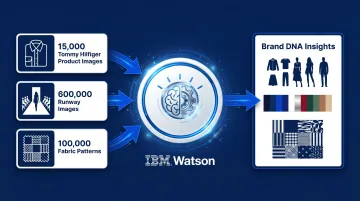
One standout outcome was Grace McCarty's plaid tech jacket, featuring a removable futuristic plaid panel made of color-changing fiber with a built-in processor. The AI's pattern recognition didn't design the jacket. It eliminated the weeks McCarty would have spent manually researching trends, freeing her to focus on the design decisions that actually required human creativity.
Michael Ferraro, Executive Director of FIT's Infor Design and Tech Lab, emphasized the collaboration's core value:
"The machine learning analysis gave us insights about the Tommy Hilfiger colors, silhouettes and prints that we couldn't begin to consume or understand with the human mind."
The AI Stylist: Personalized Fashion at Scale
Tommy Hilfiger's WeChat mini-program AI Stylist targets Chinese consumers under what the brand calls an "AIGC marketing" framework — using AI-generated content to deliver highly personalized shopping experiences. The initiative reflects a broader shift in consumer expectations: 71% of consumers expect personalized interactions, and 76% get frustrated when it doesn't happen, according to McKinsey.
The experience runs in four steps:
- Users select a seasonal theme (spring, summer, autumn, or winter)
- AI analyzes color preferences and style choices
- The system generates a complete outfit recommendation
- Users receive a personalized fashion poster featuring AI-styled models
The platform assigns "style personas" — identity tags like Seeker, Explorer, or Expressor — based on user selections. This transforms product discovery from transactional browsing into self-expression, deepening emotional engagement with the brand.
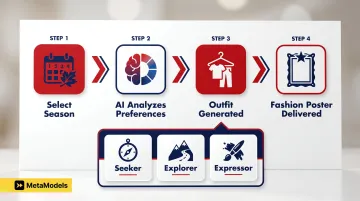
The commercial integration is built directly into the experience: users can add entire AI-curated outfits to their cart with one tap, eliminating the gap between inspiration and purchase. That frictionless path to conversion matters financially — McKinsey's research shows companies that get personalization right drive 10-15% revenue lifts.
FashionVerse: When Generative AI Enters the Fashion Game
Launched globally in January 2024 through Hilfiger Ventures, FashionVerse is a free-to-play mobile fashion styling game that uses generative AI to produce photorealistic 3D avatars and fabric textures. Unlike traditional fashion games with cartoon-like graphics, FashionVerse's proprietary AI model — developed by Brandible Games — acts as a visual filter that enhances details like realistic fabric shadows and textile draping.
Tommy Hilfiger described the transformation in a December 2023 Vogue Business interview: "AI basically did that for us overnight. It was a game changer for us." The technology upgraded juvenile-looking avatars to sophisticated, fashion-grade visuals in a single development cycle.
Key features:
- Avatars representing diverse sizes, ethnicities, and abilities
- Branded pop-ups where players interact with digitized Tommy Hilfiger collections
- Real garments integrated using 3D tools like CLO3D and Marvelous Designer
Early performance metrics show early traction:
- Ranked top 10 in Southeast Asia, Germany, and Italy during testing, beating Roblox
- Median player age: 30 (millennial and older Gen Z fashion consumers)
- 23 minutes average daily usage
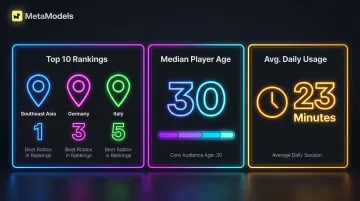
Distribution through Google Play, Apple's App Store, and the Netflix mobile app gives FashionVerse access to hundreds of millions of potential users. That reach positions it as a retail discovery platform as much as an entertainment product.
What Tommy Hilfiger's AI Playbook Teaches the Fashion Industry
One principle unites every Tommy Hilfiger AI initiative: AI processes data at inhuman scale while keeping human creatives in control. This "AI as accelerant" philosophy differs sharply from the fear-driven narrative that AI will replace designers.
AI-Powered Trend Forecasting Reduces Waste
AI-driven forecasting reduces stock-outs by 15-25% for fashion retailers using these tools, according to TheIndustry.fashion. Kering improved inventory accuracy by 20% using AI forecasting, while poor forecasting led to $140 billion in lost sales across the fashion industry in 2023.
The advantage is simple: AI can simultaneously analyze millions of runway images, social media posts, sales data, and consumer sentiment — giving brands forecasting precision that removes guesswork from seasonal collections.
Personalization Separates Fast-Growing Brands from the Pack
The AI Stylist isn't a gimmick — it reflects fundamental shifts in consumer expectations. McKinsey found that companies growing faster drive 40% more revenue from personalization than slower-growing counterparts. Brands using AI to personalize at scale will outcompete those relying on one-size-fits-all marketing.
Industry Reactions Are Mixed
Tommy Hilfiger himself acknowledged the divide in a Vogue Business interview: "People who are innovative and who are out in front of the curve embracing the culture and creating great creative marketing content really get it. But there are some people who are a little hesitant."
Real concerns exist around AI image accuracy, creative authenticity, and brand consistency. Two high-profile cases make the stakes clear:
- Levi's partnered with Lalaland.ai in March 2023 to use AI-generated models for diversity representation — backlash followed, forcing a public apology and a clarification that AI wasn't replacing diverse hiring
- H&M's March 2025 announcement about AI "digital twins" of 30 models drew immediate criticism from modeling unions and industry advocates
The pattern is consistent: AI that augments human representation lands differently than AI that attempts to replace it. Brands navigating this distinction are finding cleaner reception from both consumers and creators.
How Fashion Brands of Any Size Can Apply These AI Lessons
Tommy Hilfiger's AI investments required deep partnerships with IBM and custom development teams — resources most fashion brands don't have. But the underlying strategies are now accessible through purpose-built platforms.
Start with AI-generated fashion imagery — it's the lowest-barrier entry point. Brands no longer need expensive model bookings or photoshoots to produce high-quality visual content. Platforms like MetaModels.ai convert packshots into professional model imagery with diverse representation, real-time fabric draping, and human-reviewed quality control — bringing what Tommy Hilfiger achieves through custom 3D workflows within reach of brands at any budget, with no ongoing model fees.
Apply a practical pilot framework:
- Pick one high-impact area to test first — trend research, visual content generation, or personalization are all strong starting points
- Run a limited pilot on one product line or campaign before committing to a wider rollout
- Keep creative decisions with your team — use AI to handle data processing and content generation, not to replace judgment
- Measure outcomes directly: track time savings, cost reductions, and any conversion rate changes before expanding
This is roughly how Tommy Hilfiger built its own AI capabilities: design inspiration tools in 2018, consumer-facing personalization next, and full immersive digital experiences by 2024. Incremental steps, not a single leap.
Frequently Asked Questions
What fashion brands use AI images?
Tommy Hilfiger, H&M, and Levi's have all deployed AI-generated or AI-enhanced imagery. H&M announced AI "digital twins" of 30 models in March 2025, while Levi's partnered with Lalaland.ai in 2023 (later walked back after backlash). Adoption is accelerating across luxury and mass-market segments.
How did Tommy Hilfiger use AI in the design process?
Tommy Hilfiger partnered with IBM and FIT in 2018 on the Reimagine Retail project. AI analyzed 600,000+ runway images and 15,000 product images to identify design DNA — silhouettes, colors, and patterns — that student designers used as creative fuel for new collections.
What was the IBM and Tommy Hilfiger AI collaboration?
Reimagine Retail was a 2018 partnership with IBM Research and FIT where machine learning tools analyzed massive fashion datasets to surface trend insights. Fifteen students used these insights to design Tommy Hilfiger-inspired garments, with AI handling research and humans making creative decisions.
What is Tommy Hilfiger's FashionVerse AI game?
FashionVerse is a free-to-play mobile fashion styling game launched in January 2024. It uses generative AI to create photorealistic 3D avatars and garment visuals, allowing players to style outfits and compete in fashion challenges with inclusive, diverse avatars.
Can small fashion brands use AI for design like Tommy Hilfiger?
Yes — trend analysis, AI model imagery, and personalized recommendations are now available through accessible third-party platforms without enterprise-level investment. Platforms like MetaModels.ai, for instance, let brands convert product packshots into styled AI model photography without booking physical models or running full photoshoots.
How does AI help fashion designers with trend forecasting?
AI scans millions of runway images, social media posts, and sales data simultaneously to identify emerging patterns, colors, and silhouettes. This gives designers data-backed direction in days rather than months of manual research.