
Introduction
On-model imagery is the conversion backbone of swimwear e-commerce. Unlike apparel categories where drape and silhouette can be inferred, swimwear shoppers need to see how a garment actually behaves on a body. Fit, coverage, and how fabric stretches across curves are the primary purchase decision drivers—not pattern or color alone. A flat lay doesn't answer the shopper's core question: Will this fit me?
Traditional on-model photoshoots for swimwear involve location logistics (beach or poolside settings), model booking with specialized experience, seasonal timing constraints, and significant per-SKU costs. Professional swimwear shoots typically cost $5,000+ per session for mid-sized brands, with on-model photography running $150–$500+ per image.
A brand managing a 500-SKU catalog can spend $125,000–$250,000 annually on traditional product photography. That cost creates a bottleneck limiting how fast brands can bring products to market, test new designs, or produce diverse model representation.
AI-generated on-model imagery directly addresses that bottleneck. This guide breaks down how it actually works in practice: the inputs required, the stages of processing, and what separates purpose-built swimwear AI from generic image generators like Midjourney.
Key Takeaways
- AI on-model generation takes a flat lay or packshot of a swimsuit and produces a photorealistic image of a model wearing it—no physical photoshoot required
- Steps include garment detection, model selection, fabric simulation, lighting synthesis, and optional human quality review
- Swimwear-specific AI trains on beach/pool scenes, stretch fabrics, and diverse body types—outperforming generic tools for commercial use
- Output covers e-commerce PDPs, social media, ads, and lookbooks at 4K resolution, platform-ready for immediate use
- What once required a full shoot day now takes minutes per SKU—with up to 90%+ cost reduction
What Is AI On-Model Image Generation for Swimwear?
AI on-model image generation is a process where a machine learning system takes a product image—flat lay, ghost mannequin, or packshot—as input and outputs a photorealistic image of a human model wearing that exact garment. The technology preserves the product's color, pattern, construction details, and proportions.
This differs fundamentally from basic Photoshop techniques, generic text-to-image tools, and consumer-facing virtual try-on apps. Purpose-built fashion AI handles fabric draping, pose-aware garment fitting, and scene-consistent lighting — capabilities that require specialized training data built specifically for apparel.
There are two main workflow variants relevant to swimwear brands:
- Packshot-to-model generation: A flat product image is placed onto a generated AI model, with the garment rendered to fit naturally on the body
- Model swap/style transfer: An existing on-model image is re-rendered with a different model, body type, or background — without reshooting the garment
The two approaches suit different stages of production — packshot generation works well for new SKUs, while model swap is useful when refreshing existing catalog content for new markets or seasons.
Why Traditional Photoshoots Fall Short for Swimwear Brands
Core Cost and Logistics Friction
Swimwear shoots require beach or pool locations, professional lighting rigs built for high-contrast outdoor conditions, and models with swimwear portfolio experience. The average professional fashion photoshoot costs mid-sized brands over $5,000 per session, with editing and retouching adding $200–$500 per image on top.
A realistic shoot day covers 50-100 SKUs with ghost mannequin photography — but on-model lifestyle shots cut that capacity sharply. Location-dependent shoots carry added risk: weather delays, equipment transport, and reshoot requirements add 25–40% to planned budgets.
The Scale Problem
Brands launching seasonal collections or managing large SKU catalogs cannot afford a dedicated shoot for each product variation. Consider the multiplication factors:
- Color variants: Each colorway requires separate on-model photography
- Size-specific fit shots: Plus-size swimwear requires different models to accurately represent fit
- Market-specific imagery: Regional markets expect culturally relevant model representation
A 50-SKU product drop producing 500+ images requires approximately 10 days via traditional photography. Northern Hemisphere swimwear brands face a tight window: designs finalized by November–December, sampling complete by January–February, and marketing materials ready by March–May to hit June peak season. That's no room for a 10-day shoot.
That scale problem compounds when you add the representation gap traditional shoots also can't solve affordably.
The Diversity and Inclusivity Gap
The numbers tell a clear story:
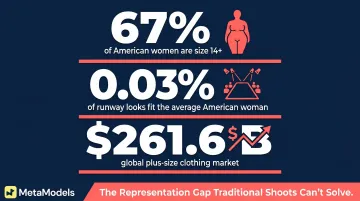
- 67% of American women are considered plus-size (size 14+)
- 0.03% of runway looks fit the average American woman
- $261.6 billion — the global value of the plus-size clothing market, including swimwear
Despite this demand, sourcing models that represent the full range of body types, skin tones, and demographics a brand serves is logistically and financially difficult under a traditional model.
Research published in the Journal of Retailing found that offering extended sizing increases consumer perceptions of trustworthiness and purchase intent — including among shoppers who don't wear extended sizes. Yet traditional photoshoots make diverse representation cost-prohibitive, particularly for specialized categories like plus-size swimwear.
How AI Generates On-Model Swimwear Images
AI on-model generation for swimwear operates through a defined pipeline. Each stage transforms the input product image into a commercially viable, photorealistic output.
Garment Input and Analysis
The process begins when the brand uploads a flat lay, ghost mannequin, or packshot image. The AI system performs automatic garment segmentation to isolate the swimsuit from the background, identifies the garment type (bikini top, one-piece, tankini, swim shorts), and analyzes material properties:
- Color accuracy and pattern detail
- Texture and reflectivity characteristics
- Structural elements (straps, hardware, seams, boning)
- Fabric type indicators (matte vs. metallic, solid vs. mesh panels)
Input image quality matters. Resolution, lighting consistency, and color reference data in the source image directly affect how accurately the AI can simulate fabric behavior downstream. Higher resolution inputs with consistent lighting and minimal background clutter produce the most accurate outputs.
Model Selection and Pose Generation
Purpose-built platforms maintain curated libraries of AI models spanning diverse ethnicities, body types, and demographics. Brands can select from that library based on parameters like age range, body type, and ethnicity — or generate a custom model built to their specific identity.
Pose generation is trained on professional fashion imagery, so the system already knows standard e-commerce angles: frontal views for coverage assessment, 3/4 profile for silhouette, back views for strap and closure details.
Fabric Simulation and Garment Fitting
Swimwear AI faces a harder physics problem than general apparel tools. The system must simulate how the suit actually behaves on a body:
- Fabric stretch: Lycra/spandex-heavy swimwear behaves differently than woven garments
- Strap tension and indentation: Realistic compression marks where elastic contacts skin
- Coverage and drape across curves: How fabric conforms to body contours
- Wrinkle patterns: Natural fabric bunching at gathering points
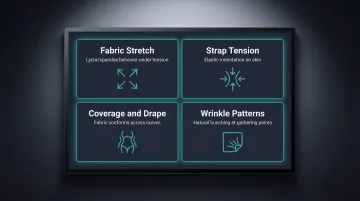
This stage produces the fitting details that signal authenticity to viewers. Slight strap compression marks, natural waist wrinkles, and color shift under stretch are what separate convincing AI imagery from outputs that look obviously synthetic.
Lighting and Scene Synthesis
Once the garment is fitted, the AI generates a scene with physically consistent lighting. Light source direction must match across the model's skin, the swimsuit fabric, and the chosen background environment — beach, pool, or studio.
Physics-based rendering ensures environmental light (reflected water, sky color, sand brightness) interacts realistically with both model and garment. Metallic fabrics require accurate specular highlights; matte fabrics absorb light differently and need separate treatment.
Quality Control and Output
Outputs are reviewed either by automated QC checks or human review. Automated checks verify garment color fidelity, background cleanliness, edge quality, and resolution thresholds. Human review is valuable for swimwear specifically, where garment accuracy—correct color, visible seams and hardware, appropriate fit presentation—directly affects return rates.
MetaModels.ai incorporates human-verified review into its workflow, where fashion specialists check every image for color accuracy, shape, and proportions before delivery. This ensures garment accuracy and produces ready-to-post content up to 4K resolution.
What Makes Swimwear-Specific AI Different From Generic Tools
Training Data Determines Output Quality
Generic image generation tools (Midjourney, DALL-E, Stable Diffusion) are trained across millions of diverse content categories. They have limited exposure to the specific visual conventions of commercial swimwear photography. As a result, they require complex prompting and still frequently produce outputs that miss e-commerce standards for composition, lighting, and garment accuracy.
Domain-specific training enables AI systems to learn implicit industry standards:
- Standard e-commerce crop ratios and aspect requirements
- Preferred poses for showing coverage and fit
- Color temperature norms for beach versus studio environments
- How specific fabric types (metallic swimwear, ribbed knits, chlorine-resistant materials) behave visually
This knowledge is embedded in the model and doesn't require user prompting.
Body Diversity and Inclusive Representation
Purpose-built fashion AI platforms maintain model libraries that include diverse ethnicities, body types, and demographics. This allows brands to generate regionally appropriate imagery or inclusive plus-size content from the same packshot input—something no traditional shoot could replicate cost-effectively.
Purpose-built platforms typically support:
- Multiple body types, from petite to plus-size
- Diverse skin tones and ethnicities for regional market relevance
- Age-range variation for lifestyle and activewear crossover
All from the same flat packshot input.
Solving the "Generic AI Face" Problem
Consumer perception research adds useful context here: 71% of shoppers in a 411-person survey couldn't distinguish AI-generated apparel images from real photography, and 60% reacted neutrally or positively once told images were AI-generated. Quality thresholds matter, though. Poorly generated imagery — the "plastic skin" output common to generic tools — measurably hurts conversion.
A known failure mode with general AI tools is model homogeneity. Identical or recognizably AI-generated faces reduce trust and create banner blindness. Platform-level model libraries and custom model creation — building a brand's own exclusive AI model identity — solve this by providing visual variety and brand consistency at the same time.
How Swimwear Brands Apply AI On-Model Images in Their Workflow
E-Commerce Product Listings
AI-generated on-model images serve multiple roles in a product listing: main PDP images, secondary angle shots, and fit guide imagery. Platform compliance is straightforward — Amazon's white background standard (RGB 255,255,255) is met by rendering the AI model on a clean background, while lifestyle variants are generated from the same processing run.
That matters because 67% of shoppers rate image quality as more important than product descriptions or reviews, and most convert only after viewing 4-6 images per product. Having both compliant and lifestyle variants ready from a single SKU removes a common production bottleneck.
Content Scaling Advantage
For brands managing large SKU catalogs or frequent seasonal launches, AI generation decouples content volume from shoot logistics. A brand can generate images for all colorways, multiple model types, and several background environments from a single flat lay per SKU.
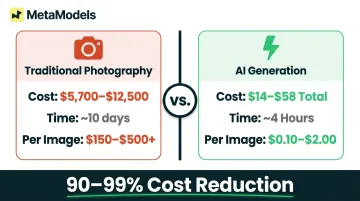
Traditional photography for a 200-SKU seasonal catalog costs $5,700-$12,500, while AI-generated imagery runs $14-$58 total—a 90-99% cost reduction. A 50-SKU drop requiring 500+ images takes approximately 10 days via traditional photography versus approximately 4 hours using AI workflows.
Social and Advertising Content Pipeline
That same efficiency extends into marketing channels. AI-generated on-model images feed directly into:
- Instagram posts and paid social creative
- Lookbooks and seasonal campaign assets
- Email marketing and promotional banners
Different model types, backgrounds, and seasonal settings can all be generated from the same product — giving brands visual freshness across channels without separate shoot budgets for each. For teams publishing daily across social platforms, this removes the bottleneck between product launch and content go-live.
Frequently Asked Questions
What type of input image does AI need to generate on-model swimwear photos?
Most AI platforms accept flat lays, ghost mannequin shots, or clean packshots. Higher resolution inputs with consistent lighting and minimal background clutter produce the most accurate outputs. Input image quality directly affects garment color accuracy and fabric simulation at the output stage.
Can AI accurately represent how swimwear fits across different body types?
Purpose-built swimwear AI platforms with diverse model libraries and fabric physics simulation can represent how garments drape and stretch across different body types. Output quality depends on how well the platform's fitting model handles strap tension, coverage variation, and fabric stretch.
How does AI handle swimwear-specific fabrics like metallic finishes or Lycra stretch?
Domain-trained swimwear AI systems model fabric reflectivity, stretch behavior, and color shift under tension—properties that generic tools typically fail to replicate accurately without extensive prompting. Platforms trained on commercial swimwear imagery understand how Lycra behaves under tension, how metallic fabrics reflect light, and how ribbed knits create surface texture variation.
Are AI-generated on-model images accepted on e-commerce platforms like Amazon and Shopify?
AI-generated images are accepted provided they meet platform technical requirements: white background (RGB 255,255,255), minimum 1,000px on the longest side, no watermarks, and fashion items must appear on a model or flat-laid. Many AI platforms can render compliant main images alongside lifestyle variants in the same workflow.
How does AI on-model image generation compare to traditional photoshoots in cost?
Traditional swimwear shoots cost $5,000–$20,000 per collection, with on-model photography running $150–$500+ per image. AI-based generation runs $0.10–$2.00 per image, eliminating location, crew, model, and post-production costs. Platform subscriptions typically start at $15–$50/month for entry-level plans.
Do AI-generated swimwear model images convert as well as real photography?
On-model imagery—real or AI-generated—delivers 20–30% higher conversions than ghost mannequin photography. AI images from domain-specific platforms perform comparably to professional photography. Generic tools can hurt conversion, so platform quality matters more than whether AI was used at all.