Introduction
AI fashion model photography has changed how e-commerce teams produce visual content. Brands now generate studio-quality imagery without booking models or scheduling shoots — cutting production costs by up to 90% and covering catalogs that would take weeks to photograph traditionally.
Resleeve.ai positions itself as an AI Content Production Studio for Fashion & Brands — and it works well for some teams. Yet many growing operations run into friction: fabric draping distortions on complex materials, a model library that doesn't reflect their target customer demographics, or an entry-level price point that doesn't include enough volume.
High-volume brands hit a different wall entirely: slow processing times when scaling across large collections.
These gaps make a strong case for exploring alternatives. This guide covers the top Resleeve alternatives evaluated on image quality, model diversity, pricing transparency, and ease of use. Each platform addresses a different combination of these priorities — whether you need human-verified outputs, 4K resolution, budget-friendly entry points, or bulk catalog automation.
Key Takeaways
- Many brands leave Resleeve seeking better garment accuracy, model diversity, or higher output resolution
- MetaModels.ai tops alternatives with human-verified images, real-time fabric draping, and 4K packshot-to-model conversion
- Botika, Creati Studio (formerly Zmo.ai), and Pixa (formerly Pixelcut) offer strong options at varying price points
- High-volume brands should prioritize automation and consistency; smaller teams should weigh ease of use and cost
- Judge any tool on four criteria: output quality, model diversity, integration capability, and total cost of ownership
What Is Resleeve.ai and Why Are Brands Looking for Alternatives?
Resleeve.ai describes itself as an "AI Content Production Studio for Fashion & Brands," operating in two modes: a full-service option where Resleeve's creative specialists handle production, and a self-service SaaS platform with AI tools.
Fashion brands and designers use it to generate model imagery and design concepts from product inputs — covering campaign editorials, lookbooks, product detail pages, social content, and e-commerce catalog imagery.
Common limitations drive users to seek alternatives:
- Restricted model diversity — Users requested more diverse options across ethnicity, body types, and age ranges to better reflect their target demographics
- Garment accuracy inconsistencies — Designs sometimes miss construction details, requiring manual fixes; fabric texture options are narrower than what traditional photography delivers
- Resolution and performance issues — Users reported lag when generating high-resolution images and noted the tool is resource-intensive
- Scaling friction — Slow processing times for large collections create bottlenecks for high-volume catalog production
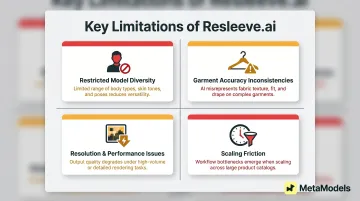
Each alternative below closes at least one of these gaps — so whether your priority is garment accuracy, model representation, 4K output, or processing speed across large catalogs, the options ahead give you a concrete comparison.
Best Resleeve Alternatives for AI Fashion Model Photography
These platforms were evaluated on garment realism and draping accuracy, AI model diversity (body type, ethnicity, age), output resolution, pricing transparency, and suitability for e-commerce or brand content workflows.
MetaModels.ai
MetaModels.ai is an AI-powered fashion imagery platform built specifically to convert packshots into professional model content with no physical shoots, model fees, or royalties. It serves fashion brands, e-commerce companies, photographers, and marketing teams across D2C, luxury, marketplace sellers, and specialized categories like sportswear and menswear.
Its core differentiator is real-time fabric draping technology that preserves critical garment details: color, shape, texture, print, and proportions. The platform provides a curated library of diverse AI models (varied ethnicity, body types, demographics) and supports custom model creation matching brand identity.
Every AI image undergoes human review by fashion specialists who verify garment accuracy before delivery, ensuring color precision, proportions, and embellishments meet professional standards. Content is delivered ready-to-post at up to 4K resolution for e-commerce, lookbooks, ads, and social media.
The workflow covers end-to-end production management:
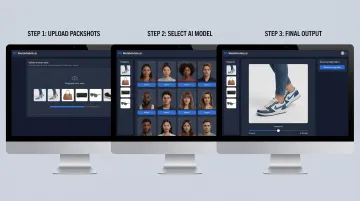
- Upload product packshots and select from AI models and styling items
- Receive marketplace-compliant imagery optimized for Amazon, Myntra, Instagram, Facebook, and TikTok
- Scale production across products, regions, and seasons with consistent quality
- Enterprise clients get API access and dedicated account management
| Aspect | Details |
|---|---|
| Key Features | Packshot-to-model conversion, real-time fabric draping, human-verified outputs, custom model creation, diverse model library, zero royalties |
| Output Quality | Up to 4K resolution; ready-to-post for e-commerce, lookbooks, ads, and social media |
| Pricing Model | Starter: 20 credits; Growth: 100 credits; Pro: 300 credits; Enterprise: Custom pricing with API access; Pay-as-you-go option also available |
Botika
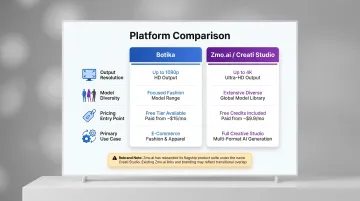
Botika is an AI fashion model photo generator targeted at e-commerce sellers who need to swap generic mannequin or flat-lay images for on-model product shots at scale. According to Botika, the platform cuts production costs by up to 90%, with case studies from brands like Jordache as supporting examples.
Its standout feature is tiered resolution control tied directly to pricing: HD on Lite, 2K on Pro, and 4K on Advanced plans, giving catalog teams predictable quality by budget. Key capabilities include:
- Simple upload-and-generate workflow with wide-ranging model presets
- Editorial creation tools and AI-driven retouching
- Batch processing and video generation (Pro and above)
That said, third-party reviews identify persistent limitations: blurred textile textures, deformed fingers blending with apparel, warped brand logos, and "painted-on" effects rather than realistic fabric drape.
| Aspect | Details |
|---|---|
| Key Features | On-model photography from flat lays, mannequin-to-model conversion, AI fashion video, model gallery with diversity tools, editorial creation, batch processing |
| Output Quality | Lite: HD resolution; Pro: 2K resolution; Advanced: 4K resolution |
| Pricing Model | Free trial available; Lite: $33/month (600 credits/year, HD); Pro: $35/month (600 credits/year, 2K, video); Advanced: $40/month (600 credits/year, 4K); Enterprise: Custom pricing. All prices billed annually with 17% savings. |
Zmo.ai (Now Creati Studio)
Zmo.ai has rebranded to Creati Studio, pivoting toward AI video generation while retaining fashion model generation capabilities within a broader creative suite. The platform is no longer positioned primarily as a fashion tool but as a "Viral AI Video Generator" for URLs, images, or text-to-video content.
Historically, the platform's key strength was flexible prompt-based control: brands could generate diverse model looks quickly using text prompts or image inputs, swapping backgrounds, models, or products instantly. According to third-party reviews, it previously offered 50+ body types and skin tones with processing under 3 minutes per model and output up to 4K resolution.
Trade-offs include visual artifacts, unusual fabric draping, and inconsistencies with highly textured fabrics, metallic materials, and intricate patterns. The rebrand raises real questions about long-term feature availability for fashion-specific workflows.
| Aspect | Details |
|---|---|
| Key Features | Prompt-based model generation, garment-on-model imagery, background replacement, style control, "Swap" mode for backgrounds/models/products, AI influencer generation |
| Output Quality | Up to 4K resolution (per third-party review; official specs unverified due to rebrand) |
| Pricing Model | Reported by third-party review: Starter $49/month (100 generations); Professional $149/month (500 generations); Enterprise custom pricing. Official pricing unverified from Creati Studio site as of May 2026. |
Revery.ai
Critical status update: As of May 2026, the revery.ai domain redirects to an unrelated cybersecurity product called "Prowl." The virtual try-on platform does not appear to be accessible at its original domain, and no public shutdown announcement was found. Brands considering Revery.ai should verify operational status before investing.
Historically, Revery.ai was a Y Combinator-backed startup focused on virtual try-on technology for fashion e-commerce, allowing shoppers and brands to visualize garments on AI model bodies drawn from product images or user photos. The platform used deep learning and computer vision to create scalable virtual try-on experiences with processing capacity of 1M+ SKUs per week.
Where it historically excelled was try-on accuracy for e-commerce product pages: API-level integration for online stores and clean model output suited for direct product listings. The focus was narrower than full campaign imagery, optimized specifically for virtual dressing room features on retail sites.
Historical pricing (last updated March 2022) included a free plan with watermarked images, a $50/month Starter Kit, and custom Enterprise pricing.
| Aspect | Details |
|---|---|
| Key Features | Virtual try-on engine, product-page-ready outputs, API integration, garment-fit visualization, mix-and-match outfit creation |
| Output Quality | Resolution specifications not publicly available; platform operational status uncertain |
| Pricing Model | Historical pricing (unverified): Free plan (1,000 images, watermarked); Starter Kit $50/month (4,000 images); Enterprise custom pricing. Current availability unknown. |
Pixelcut (Now Pixa)
Pixelcut has rebranded to Pixa, positioning itself as "The New Operating System for Creative Work." It's an AI-powered product photography tool popular among small-to-mid-size e-commerce sellers who need fast, affordable visual content.
Important distinction: Pixa is a general-purpose AI photo and video editor, not a dedicated AI fashion model generator. It does not generate AI models wearing clothing from garment images or offer virtual try-on capabilities. Instead, it provides post-production tools: background removal (for image and video), upscaling (up to 16x including Topaz models), batch editing across hundreds of files, generative fill, AI shadow generation, and image expansion.
Its appeal is straightforward: low cost and ease of use for solo sellers or small teams focused on product photography editing rather than on-model generation. The free tier covers background removal, magic eraser, and upscaling with no AI credits. Pro at $10/month adds 600 AI credits, unlimited background removal and upscaling, and a commercial license.
The mobile-friendly interface works well for quick edits, but Pixa is less suited for high-volume catalog automation or garment-on-model rendering that dedicated fashion AI platforms handle.
| Aspect | Details |
|---|---|
| Key Features | AI background generation, product showcase from text prompts, background removal (image and video), upscaling up to 16x, batch editing, generative fill, shadows, expand, personas |
| Output Quality | HD exports; unlimited upscaling (up to 16x) on Pro/Business plans |
| Pricing Model | Free: $0/month (limited features, no AI credits, no commercial license); Pro: $10/month ($8/month yearly, 600 AI credits, commercial license); Business: $30/month ($24/month yearly, 3,600 AI credits, 10-person team) |
How We Chose the Best Resleeve Alternatives
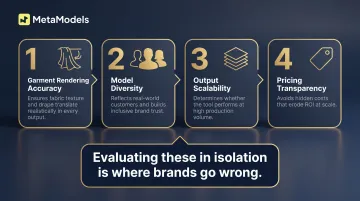
Tools were assessed based on four primary criteria:
- Garment rendering accuracy — fabric drape, fit, and texture realism
- Model diversity — body types, ethnicities, age ranges, and demographics
- Output scalability — high-volume production without quality degradation
- Pricing transparency — clear plans for brands of different sizes
Garment rendering accuracy remains the hardest problem in AI fashion photography. User feedback across Botika, ZMO.ai, and Resleeve.ai consistently flags fabric draping distortions, texture rendering issues, and pattern warping. No platform has fully solved garment physics for sheer fabrics, metallic weaves, or intricate embellishments.
Tools that combine real-time fabric draping technology with human-reviewed outputs — like MetaModels.ai — tend to produce more accurate results than generic image generators.
Model diversity varies widely across platforms. Libraries range from a handful of generic presets to curated collections spanning age ranges, ethnic representations, and body sizes. MetaModels.ai and Botika explicitly offer diversity and inclusion tools; most other tools default to a narrow set of stock model types.
Output scalability determines whether a tool works for a 50-SKU launch or a 5,000-SKU catalog. Batch processing, consistent rendering across large SKU counts, and brand-consistent production management all matter here. Enterprise-tier features like API access and dedicated account management signal readiness for large-scale operations.
Pricing transparency affects real cost more than the headline number suggests. Platforms with publicly listed pricing, explicit resolution tiers, and free trials (like Botika) carry lower adoption risk than those requiring demos or custom quotes. Per-image pricing and credit rollover policies directly affect total cost of ownership for high-volume users.
These four criteria matter together — evaluating them in isolation is where brands go wrong. The most common mistake: prioritizing low upfront cost over garment accuracy and model consistency. The result is off-brand imagery, high rejection rates, and manual retouching that quietly consumes any savings. A $10/month tool requiring 30 minutes of retouching per image costs far more in practice than a $40/month platform delivering publish-ready outputs.
According to McKinsey, generative AI could add $150 billion to $275 billion to operating profits in apparel, fashion, and luxury within three to five years—but only if output quality supports actual deployment at scale.
Conclusion
Each Resleeve alternative covered here addresses a different combination of quality, diversity, automation, and cost. The right tool depends on your priorities:
- Botika — tiered resolution control, ideal for catalog teams needing explicit quality gates
- Zmo.ai (Creati Studio) — flexible prompt-based generation, though now pivoting toward video
- Pixa — affordable post-production editing, but lacks on-model generation
- Revery.ai — operational status currently uncertain
Test any tool against a real sample from your catalog before committing. Pay attention to how the AI handles your specific garment types — knitwear behaves differently than structured tailoring, and sheer fabrics or metallics challenge most platforms.
Verify whether the model library reflects your target customer. Upload a structured blazer, a knit sweater, and a patterned dress to see how fabric drape, texture, and print accuracy hold up across different fabric behaviors.
If your test reveals that most tools fall short on garment accuracy or model diversity, that's where platform selection really matters. For fashion brands that need human-verified, brand-consistent imagery at scale — with real-time fabric draping and no royalty constraints — MetaModels.ai converts packshots into 4K model content reviewed by fashion specialists, ensuring color, shape, and proportion accuracy before delivery.
Frequently Asked Questions
Is Resleeve.ai free to use?
No, Resleeve.ai does not offer a free plan. The Basic plan starts at $19/month (1,030 credits) and the Plus plan at $49/month (2,800 credits); both include image creation, video creation, a commercial license, and a private workspace. Enterprise pricing is available on request, and unused credits do not roll over.
What is the best AI tool for generating fashion model photos?
It depends on your use case. MetaModels.ai suits brands that prioritize garment accuracy, human-verified outputs, and zero-royalty scale. Botika works well for teams needing explicit resolution tiers (HD/2K/4K). Smaller sellers doing basic editing may find Pixa's $10/month Pro plan sufficient, though it lacks dedicated fashion model generation.
Can AI fashion model tools replace real model photoshoots?
AI tools effectively replace standard e-commerce shots and lookbook content, cutting model fees, studio costs, and post-production labor. According to Vogue, 58% of photographers had lost assignments to generative AI by February 2025. Highly stylized editorial campaigns with complex art direction may still benefit from traditional photography.
How accurate is AI-generated clothing draping on virtual models?
Accuracy varies by platform. Tools with real-time fabric draping and human review (such as MetaModels.ai) outperform generic image generators, especially on structured garments and intricate patterns. That said, draping distortions, texture blurring, and pattern warping remain industry-wide challenges for sheer materials, metallics, and complex embellishments.
What image resolution do AI fashion model platforms typically output?
Most tools output between 1080p and 4K resolution. Botika explicitly tiers resolution by plan: HD (Lite), 2K (Pro), and 4K (Advanced). MetaModels.ai delivers content up to 4K ready-to-post for e-commerce, ads, and lookbooks. Zmo.ai offered up to 4K before its rebrand to Creati Studio. Higher-tier platforms provide print-ready or high-resolution files suitable for advertising and editorial use.
Do AI fashion model platforms support diverse body types and ethnicities?
Model diversity varies widely across platforms. Some offer only preset body types and limited ethnic representations. MetaModels.ai and Botika provide curated libraries spanning varied ethnicities, demographics, and body sizes, with explicit diversity and inclusion tools. Platforms supporting custom model creation (like MetaModels.ai) allow brands to match specific demographic profiles reflecting their target audience and brand values.